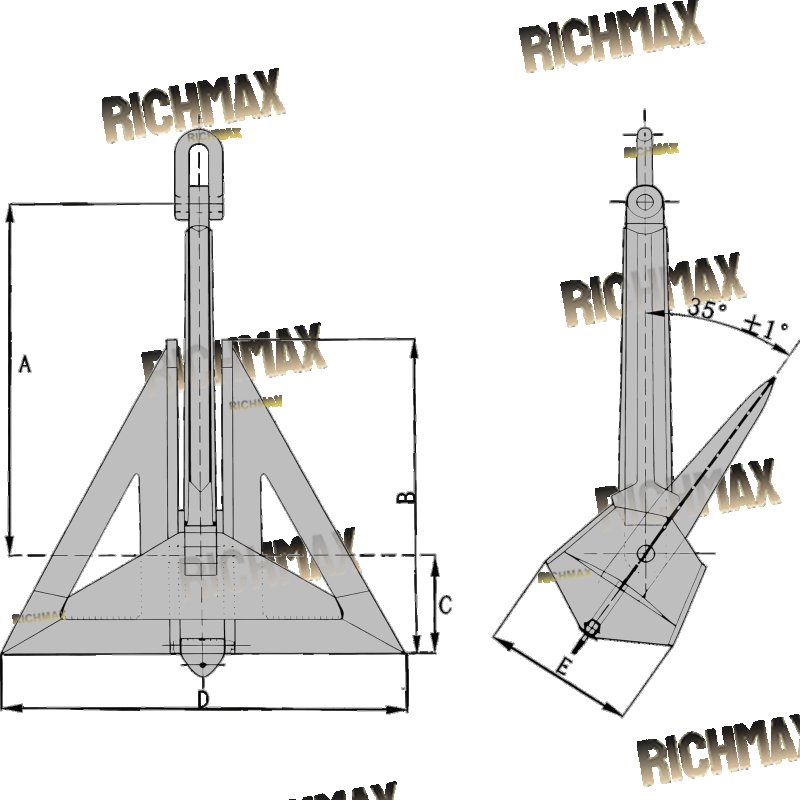
Structure
Design
The Delta Flipper Anchor consists mainly of a central shank, broad fluke assembly and supporting structural members. These components work together to transfer the pulling load from the anchor connection into the seabed and develop holding resistance once the flukes are embedded.
The shank provides the main load path between the anchor connection and the fluke assembly. When tension is applied through the anchor chain, the load travels along the shank and into the flukes. The shank therefore needs adequate strength and stiffness to maintain its designed shape under load. If the shank or its connection to the fluke assembly deforms excessively, the working geometry of the anchor can change.
The fluke assembly is the part that engages with the seabed. Its width, profile and working angle affect how the anchor penetrates the soil and how the surrounding seabed material acts against the flukes.
As the anchor is pulled, the flukes penetrate into the seabed and become progressively embedded. The surrounding soil then resists the movement of the flukes. This is the basic holding mechanism of a Delta-type anchor: holding capacity comes primarily from fluke penetration and seabed resistance, not simply from the weight of the anchor.
The shank-to-fluke connection is another critical structural area. Supporting plates, reinforcement and connection details help spread the applied load through the main structure and reduce local stress and deformation. Keeping the shank and flukes in their intended position is important because even relatively small changes in working geometry can affect penetration and holding behavior.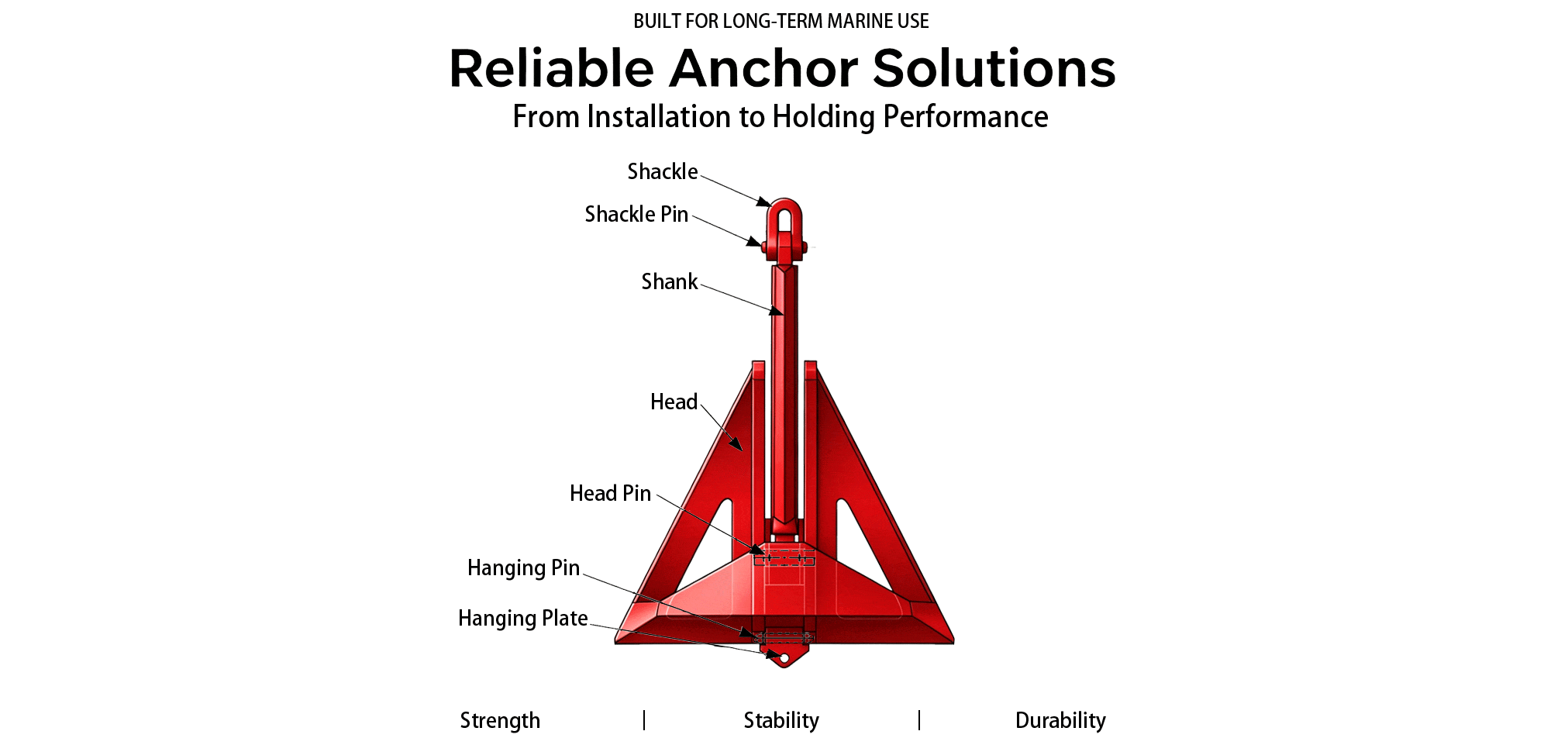
Holding Capacity Through Structural Geometry
The holding performance of a Delta Flipper Anchor depends on how effectively its geometry allows the flukes to enter and remain engaged with the seabed.
Once the anchor is loaded, the shank transfers the pulling force toward the fluke assembly. The flukes penetrate the seabed, and the soil surrounding the embedded fluke surfaces provides resistance against further movement.
The fluke area, profile, working angle and shank-to-fluke relationship all have a role in this process. The purpose is not simply to make the flukes larger, but to achieve a geometry that allows the anchor to penetrate and develop resistance under the expected loading conditions.
This is why anchor performance should not be judged by anchor weight alone. Anchor dimensions, fluke geometry, seabed type, expected penetration, loading direction and installation conditions all need to be considered when determining whether a particular anchor is suitable for a project.
For offshore and vessel applications, the same anchor weight can produce different results in different seabed conditions. Soft clay, sand, gravel and harder seabed materials do not provide the same penetration or resistance. The anchor specification should therefore be based on the actual project conditions rather than weight alone.
Assembly and Transport Considerations
For large marine anchors, size and weight become practical issues during fabrication, inspection, lifting, storage and transportation. These factors need to be considered alongside the working requirements of the anchor.
Where the approved design allows component-based fabrication, the main structural sections can be fabricated and inspected before final assembly. This can make welding, dimensional inspection, surface treatment, lifting and handling more manageable during production.
For projects with transport or site-handling limitations, the anchor may also be supplied in separate structural sections where the design permits this arrangement. Components can then be transported separately and assembled at the designated location.
This approach can be useful when the completed anchor exceeds available transport dimensions or when the lifting capacity at the loading or installation location is limited. It can also simplify handling of large components during factory production.
However, the assembly arrangement should be determined by the approved design. A sectional anchor should not be divided simply for transport convenience, because the connection between sections is part of the structural design and must meet the specified requirements.
When requesting a quotation, buyers should clarify whether the anchor is required as a fully assembled unit or as separate components for final assembly, as well as any limitations related to transportation, lifting equipment and site installation.
Designed for Project-Specific Requirements
Although the Delta-type design principle can be applied to different anchor sizes, the actual dimensions and proportions should be established according to the requirements of the project.
Before production, the buyer should confirm the required anchor weight, overall dimensions, fluke configuration, connection arrangement, material requirements, expected mooring loads, seabed conditions and applicable project or classification requirements.
The approved manufacturing drawing should then be used as the production reference. Key details include shank dimensions, fluke geometry, plate thickness, reinforcement, connection details, weld requirements and dimensional tolerances.
This is particularly important for large anchors. The final geometry affects how the anchor sits, penetrates and works on the seabed, while the structural details determine how the applied load is carried through the anchor.
For project-specific orders, confirming these details before production helps ensure that the manufactured anchor matches the intended working configuration rather than being supplied simply according to a nominal anchor weight.
Material
Material selection depends on the anchor size, working load, service conditions and the requirements of the vessel or project. The main structural parts, including the shank and fluke assembly, are normally made from structural steel with suitable strength, toughness and welding properties.
Why Structural Steel?
A large marine anchor has to withstand considerable load through the shank, flukes, connections and welded areas. Structural steel is widely used because it provides a practical balance between strength, toughness, weldability and fabrication cost.
This is important for a fabricated anchor. The material is not only carrying the load; it also has to be cut, formed, welded and assembled into the final structure. A steel grade with good mechanical properties but unsuitable welding characteristics may create problems during fabrication.
The required steel grade is therefore normally decided together with the anchor design, plate thickness and welding requirements.
What Are the Limitations?
The main limitation of ordinary structural steel in marine service is corrosion. It does not have the corrosion resistance of stainless steel, and prolonged exposure to seawater can lead to surface corrosion and, if left untreated, deeper material loss.
Another point is that higher strength does not automatically mean a better anchor. The steel grade still needs to match the design, welding procedure and actual loading conditions. Using a higher-grade material without reviewing the complete structure may add cost without providing a practical benefit.
How Do We Control the Material?
For a project order, the buyer can specify the required steel grade, standard, plate thickness, mechanical properties, impact requirements and certification.
Before fabrication, the material can be checked against the purchase requirements. Depending on the project, this may include:
| Depending On The Project |
| Steel grade and heat number | Material certificate | Chemical composition | Impact properties where required |
| Plate thickness and dimensions | Yield and tensile strength | Material traceability |
|
The heat number is particularly useful because it provides a link between the steel plate and its original mill documentation. Where traceability is required, this information can be retained through the manufacturing process.
Can Another Material Be Used?
Yes, other steel grades can be considered if they are required by the approved drawing, vessel owner, shipyard, classification society or project specification.
Higher-strength structural steel may be used for certain designs, but changing the material is not simply a matter of replacing one steel grade with another. The new material needs to be checked against the design, plate thickness, welding procedure and applicable requirements.
Stainless steel or other corrosion-resistant materials are also possible in some applications, but they are not normally a straightforward replacement for structural steel in a large fabricated anchor. The cost, availability, welding requirements and structural design all need to be considered.
What About Seawater Corrosion?
A structural-steel anchor working in seawater needs suitable corrosion protection. The coating system depends on the service environment and the project requirements.
During handling and anchoring operations, the coating can be damaged by contact with chains, deck equipment, seabed and other hard surfaces. These areas should be checked during inspection and maintenance.
If corrosion is found, the treatment depends on its condition. Light surface corrosion may be removed and recoated. More serious corrosion, especially pitting or noticeable loss of steel thickness, needs closer inspection to determine whether repair or replacement is necessary.
For offshore or long-term marine service, corrosion protection should be specified together with the material requirements rather than considered only after the anchor has been manufactured.
How Can the Material Be Verified?
A steel plate can look perfectly normal and still be the wrong grade. Visual inspection alone cannot confirm the material specification.
For project orders, material verification normally starts with the material certificate and heat number. The grade and standard shown on the certificate should correspond with the material actually used for the anchor.
Where the project requires a higher level of verification, chemical analysis, mechanical testing, third-party inspection or classification inspection can be arranged according to the agreed inspection requirements.
For this reason, buyers should confirm the required steel grade, material standard, certification and traceability requirements before production, particularly for large anchors and offshore projects.
If a specific class rule, approved drawing or project material specification applies, please provide it at the quotation stage so the material and manufacturing requirements can be checked before production.
How to use?
The Delta Flipper Anchor is used with an anchor chain or mooring arrangement to hold a vessel or offshore structure against the seabed. Anchor selection depends on the vessel size, chain arrangement, water depth, seabed condition and the loads expected during operation.
Assemble Guide:
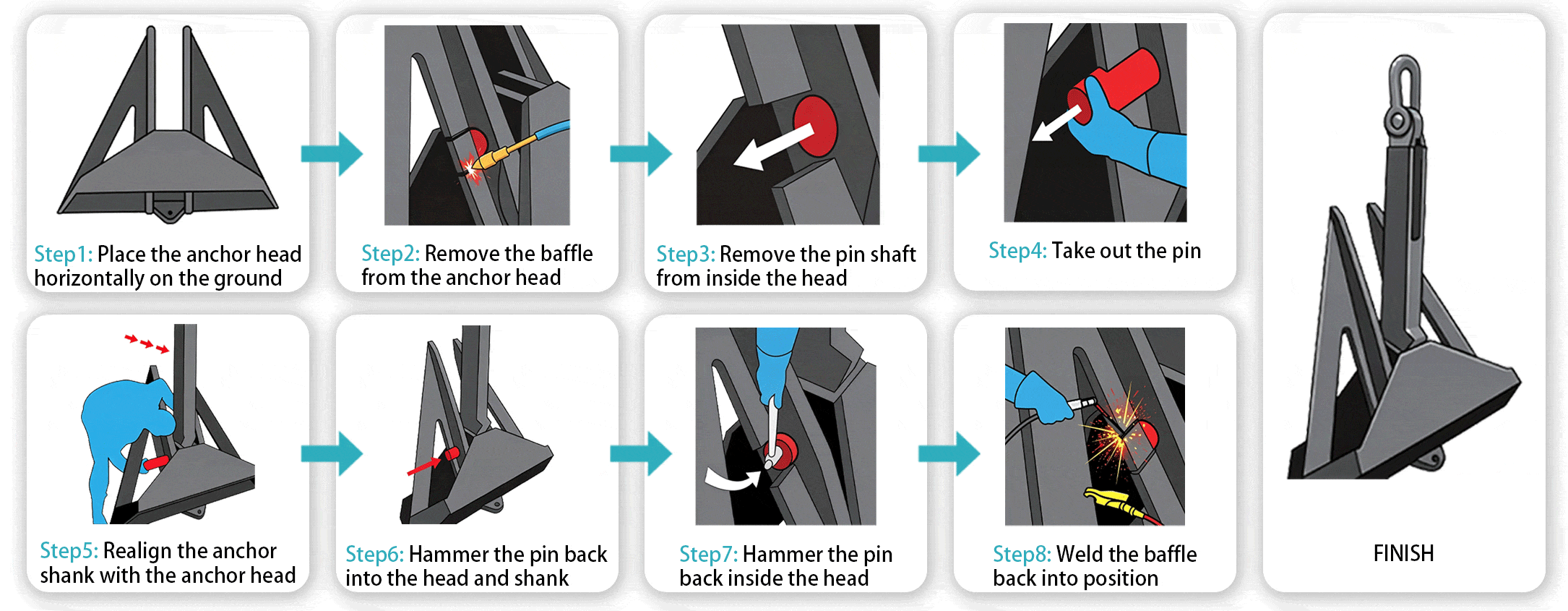
Normal Use
During normal operation, the anchor is lowered to the seabed while the anchor chain is paid out under control. After the anchor reaches the bottom, further chain payout and controlled loading allow the flukes to take hold of the seabed.
The anchor does not rely on its weight alone to hold the vessel. Its holding resistance comes mainly from the flukes engaging and penetrating the seabed. How well this works depends on the soil, anchor orientation, embedment, chain scope and the load applied to the anchor.
For this reason, an anchor that works well in one location may not give the same result in another. The required anchor size and chain arrangement need to be checked against the actual vessel and site conditions.
Installation and Deployment
Installation at site is relatively straightforward once the anchor has been properly matched to the vessel and anchoring system.
The usual procedure is:
1. Connect the anchor to the specified shackle, swivel, chain or other connecting hardware.
2. Position the anchor for lifting and deployment using the vessel's available deck equipment.
3. Lower the anchor toward the seabed while paying out the chain at a controlled speed.
4. Let the anchor settle on the seabed and allow the flukes to take their working position.
5. Pay out sufficient chain and apply the required load to set the anchor into the seabed.
6. Check the anchor and chain condition before the system is put under the intended working load.
For larger anchors, the installation is normally carried out with a vessel crane, deck machinery or other suitable lifting equipment. The actual method depends mainly on anchor weight, vessel layout, water depth and the equipment available on site.
On-Site Handling and Installation
There is no complicated assembly process for the anchor itself. In most cases, the anchor arrives as a complete unit and is connected directly to the specified anchoring arrangement.
The main consideration on site is handling. A large marine anchor can be heavy and difficult to move manually, so the lifting capacity, lifting points, deck space and connection sequence need to be considered before installation.
For offshore projects, installation planning is more important than the mechanical assembly of the anchor. The vessel needs to have suitable lifting and chain-handling equipment, and the deployment method should suit the water depth, seabed and expected environmental conditions.
Suitable Operating Conditions
The Delta Flipper Anchor is suitable for marine and offshore applications where the flukes can penetrate the seabed and develop holding resistance.
| Typical Applications |
| Commercial vessels | Offshore support vessels | Work vessels |
| Marine construction vessels | Offshore engineering projects | Temporary offshore anchoring |
| Mooring systems | Port and marine facilities | Dredging and marine construction |
Sand, clay and silty seabeds can generally provide suitable conditions for fluke penetration, but the actual holding capacity varies with soil density, strength and other site conditions. Gravel and mixed seabeds need more careful assessment, particularly where large stones or hard layers may prevent proper penetration.
Operating Limitations
The anchor should not be expected to perform the same way in every type of seabed.
Very hard ground, rock, heavily compacted soil, large gravel or seabeds with significant obstructions can limit fluke penetration and reduce the available holding resistance. Water depth, chain scope, anchor orientation and environmental loads can also affect the result.
The anchor and chain should also be sized as a complete system. Using a heavier anchor does not by itself solve problems caused by an unsuitable seabed, insufficient chain scope or inadequate connecting hardware.
When Further Assessment Is Required?
Additional assessment is needed when the anchor will be used for deep-water mooring, permanent offshore mooring, high environmental loads or projects with specific classification or client requirements.
Rocky seabeds and locations where the anchor cannot achieve sufficient penetration should also be reviewed before the anchor is selected.
For these applications, the buyer should provide the vessel or structure details, water depth, seabed information, required holding capacity and applicable project requirements. The anchor size, chain arrangement and installation method can then be checked against the actual working conditions.
Important Selection Point
The Delta Flipper Anchor should not be selected simply by comparing anchor weight or overall dimensions.
A suitable selection considers the anchor, chain, vessel, seabed and expected loading together. This is particularly important for offshore and engineered mooring applications, where the anchor must provide reliable holding performance under the actual conditions at the installation site.
Applications
The Delta Flipper Anchor is used for vessel anchoring, temporary mooring and marine construction work where the anchor needs to hold in the seabed under working loads.
It is commonly specified for commercial vessels, offshore support vessels, work boats, construction vessels and dredging vessels. It can also be used in project-specific mooring arrangements for offshore and nearshore work.
Marine and Offshore Applications:
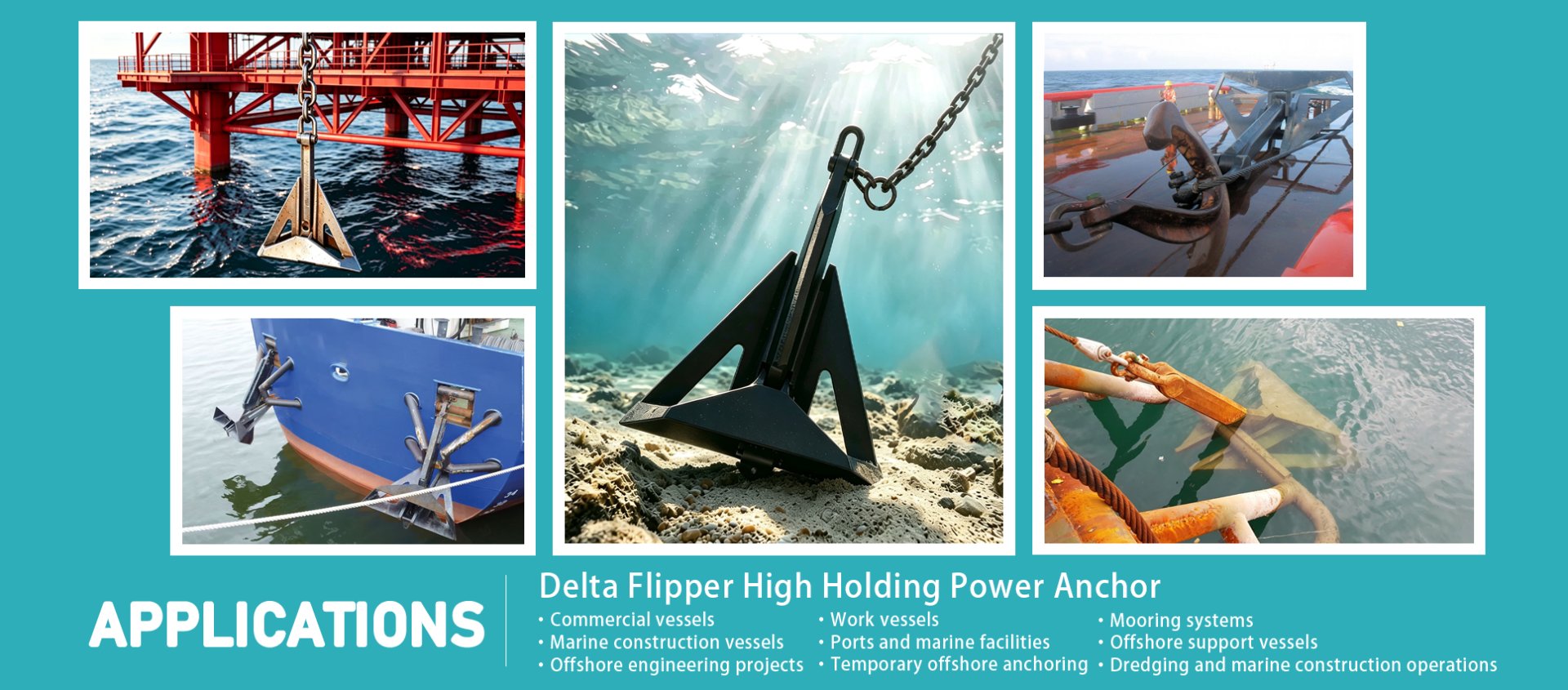
Typical applications include:
Commercial Vessels — Used as part of the vessel's anchoring arrangement. Anchor size and weight are matched to the vessel, chain system and applicable requirements.
Offshore Support Vessels — Used for anchoring and temporary positioning during offshore support work.
Work Vessels — Suitable for work boats that need to maintain position during construction, maintenance or other marine operations.
Marine Construction Vessels — Used for temporary positioning during installation, repair, dredging and other construction work.
Dredging Operations — Used to hold the vessel or working platform in position while carrying out dredging and related marine work.
Offshore Projects — Can be included in temporary anchoring or mooring systems for offshore installation, maintenance and construction projects.
Port and Nearshore Work — Used for temporary anchoring during port construction, maintenance and other nearshore operations.
What the Anchor Does?
The anchor provides holding resistance by engaging with the seabed.
When the anchor is lowered to the seabed and load is applied through the anchor chain, the flukes engage with the soil. Depending on the seabed, the flukes penetrate into sand, clay or silt and resist further movement.
The holding capacity is therefore not determined by anchor weight alone. Fluke geometry, anchor size, penetration, seabed condition, loading direction and the complete mooring arrangement all affect the result.
Where It Can Be Used?
The Delta Flipper Anchor is generally considered for seabeds where the flukes can enter and develop resistance, such as:
Sand
Clay
Silt
Some mixed seabed conditions
Actual suitability depends on the soil conditions at the project site. Seabed investigation or available geotechnical information should be reviewed for offshore projects with defined holding requirements.
| Other Selection Factors |
Vessel displacement and operating condition | Wind, wave and current loads | Anchor chain size and length | Scope and anchoring arrangement |
| Required holding capacity | Classification requirements | Project drawings and specifications |
|
Where It May Not Be Suitable?
The anchor is not intended to solve every anchoring condition.
Extra care is required for rock, very hard seabed, heavily compacted soil, large seabed obstructions or conditions where the flukes cannot achieve sufficient penetration.
For permanent offshore mooring, high environmental loads or specially engineered foundations, the anchor should only be used when it has been included in the approved engineering design. Another anchor type or anchoring method may be more appropriate depending on the project.
Typical Project Use
Supply for the Project
|
| Vessel anchoring systems | Temporary offshore mooring | Offshore construction |
| Marine installation work | Dredging projects | Port construction |
| Nearshore construction | Offshore maintenance | Temporary positioning of work vessels |
In most projects, the anchor is only one part of the system. Anchor chain, shackles, swivels, wire or rope and the connection arrangement also need to match the required working load and operating conditions.
Can It Be Included in a Customer's Scheme?
Yes, where the anchor type and holding requirements match the project conditions.
For quotation and technical review, we normally need the available information on the vessel or structure, required anchor weight or holding capacity, water depth, seabed condition, anchor chain size, environmental loads, classification requirements and project drawings or specifications.
The anchor can be manufactured to an approved drawing or customer specification. Material grade, dimensions, testing, coating and certification requirements can also be reviewed before production.
Application Selection
Do not select the anchor by vessel type or weight alone.
A Delta Flipper Anchor suitable for one vessel or project may require a different size or configuration for another project. The final selection should be checked against the seabed, expected loads, vessel or structure, chain arrangement and project requirements before the anchor is ordered.
How to choose a delta flipper anchor?
Choosing a Delta Flipper Anchor is not just about choosing an anchor by weight. The anchor has to match the vessel, anchor chain, connection hardware and the conditions in which it will be used.
For a new vessel, the approved drawing or vessel specification should be the first reference. For a replacement anchor, the existing anchor and chain details are usually the best starting point.
Before asking for a quotation, it is useful to confirm the following points.
Anchor Size and Specification
The required anchor weight may already be specified by the vessel design, classification requirements or an existing anchor drawing. If so, provide the approved specification rather than selecting another weight based only on vessel size.
Weight is only one part of the specification. The anchor's overall dimensions, shank, fluke assembly and connection dimensions also need to fit the vessel's anchoring arrangement.
For replacement orders, the existing anchor dimensions and photographs can help confirm whether the new anchor needs to be an exact replacement.
Vessel Type
Start with the vessel for which the anchor will be used.
Commercial vessels, workboats, offshore support vessels, dredgers and marine construction vessels can have quite different anchoring requirements. Vessel displacement is useful, but it should be considered together with vessel dimensions, operating area and anchoring arrangement.
If the vessel already has an approved anchor specification, there is usually no reason to select the anchor from displacement alone.
Anchor Chain and Connection Hardware
The anchor must work with the chain and the hardware connecting it to the vessel.
Provide the chain diameter and grade, anchor shackle size, pin diameter and other connection dimensions where available. The connection between the anchor, shackle and chain should be checked before the anchor is manufactured.
The anchor also needs to suit the vessel's hawse pipe, anchor pocket or other stowage arrangement. A technically suitable anchor can still be difficult to install if these dimensions are overlooked.
Water Depth and Chain Arrangement
Water depth affects the amount of chain available during anchoring and the angle at which the anchor is loaded.
For offshore work, give the normal and maximum working water depth if known. Chain length and the actual anchoring arrangement should be considered at the same time.
Do not assume that increasing the anchor weight will solve a problem caused by insufficient chain scope or an unsuitable anchoring arrangement.
Seabed
The seabed matters because the flukes need to enter and engage with the bottom to develop holding resistance.
Useful information includes whether the bottom is mainly sand, clay, mud, silt, gravel or mixed material. Hard or compacted seabeds may require a different assessment from softer bottoms.
If a seabed survey or geotechnical report is available, it is better to use that information than to select an anchor on the assumption that the seabed is ordinary sand or mud.
Required Holding Capacity
If the project gives a required holding capacity, design load, proof load or test load, include it in the enquiry.
Holding capacity cannot be judged from anchor weight alone. The result depends on the anchor geometry, seabed, chain arrangement, installation and loading condition.
This is also why copying the anchor specification from another vessel can give the wrong result, even when the two vessels appear similar.
Classification Society
For a classed vessel or offshore project, confirm the classification society at the beginning of the enquiry.
The applicable requirements may come from ABS, DNV, LR, BV, CCS, RINA or another specified society. The buyer should also confirm whether class attendance, witnessing, approval or certification is required.
This can affect the material, welding, inspection, testing and documents supplied with the anchor.
Do not leave the class requirement until the anchor is ready for shipment. It is much easier to agree on it before production starts.
Standard and Approved Drawing
Tell the supplier which standard, class rule or project specification applies.
If there is an approved anchor drawing, send it with the enquiry. This is normally the clearest way to avoid differences in dimensions, structure and connection details.
A drawing also helps when the anchor is being made as a replacement for an existing unit.
Material
Material should be agreed before production.
For the shank and fluke assembly, the steel grade may be specified together with yield strength, tensile strength, impact requirements, plate thickness and welding requirements.
For larger anchors and offshore projects, material certification may also be required by the project or classification society.
If the buyer has a specified material grade, it should be written into the enquiry. Changing the material after fabrication has started can cause unnecessary delays and additional inspection work.
Surface Treatment
State the required surface treatment in the purchase specification.
For marine service, this may include surface preparation, primer, paint system, coating thickness or other corrosion protection requirements. If the vessel or project already has a coating specification, use that rather than choosing a coating separately from the anchor specification.
For replacement anchors, it is also worth checking whether the new anchor needs to match the existing coating system.
Inspection and Testing
Inspection requirements should be agreed before production.
Depending on the project, the buyer may require dimensional and visual inspection, material verification, welding inspection, NDT, load or proof testing, or inspection by a third party or classification society.
Not every anchor requires the same inspection package. The actual requirements should come from the purchase specification, applicable standard or class rules.
Certificates
Tell the supplier what documents are required when requesting the quotation.
Depending on the order, this may include material certificates, inspection reports, test certificates, dimensional records, NDT reports, certificate of conformity or classification documents.
If a class certificate or surveyor-witnessed inspection is required, this should be stated before production rather than just before shipment.
Quantity
Quantity is straightforward, but it still affects production and inspection planning.
For project orders, state the total quantity and whether the anchors will be shipped together or in batches.
If different vessels require different anchor sizes, list the quantity for each specification rather than giving only a total quantity.
Transport and Destination Port
For large anchors, shipping dimensions are almost as important as shipping weight.
Provide the destination port so freight can be calculated. If possible, confirm the available lifting and handling arrangements as well.
Overall dimensions can affect the choice between container, flat-rack or breakbulk shipment, as well as loading and unloading at the destination.
Common Problems When Selecting Anchor
A 5-ton or 10-ton anchor is not a complete specification. The dimensions, fluke arrangement, connection and vessel installation need to match as well.
Displacement is useful for an initial assessment, but it does not describe the complete anchoring condition. Vessel dimensions, chain, water depth, seabed and design requirements also matter.
Two vessels of similar size may use different anchors because their chain, class requirements, operating areas and anchoring arrangements are different.
The anchor may be correct while the connection is wrong. Pin diameter, opening, shackle size and connection geometry should be checked together.
Sand, clay, mud, gravel and hard bottoms do not behave in the same way. The actual project seabed should be considered where holding performance is important.
Steel grade, plate thickness, impact requirements and material certificates should be agreed before fabrication.
If a classification society needs to witness testing or inspect production, this needs to be planned in advance.
A lower price may simply mean that the two quotations do not include the same material, coating, inspection, testing or certification requirements.
A large anchor still has to be lifted, moved, shipped and installed. Overall dimensions and unit weight should be checked before the final specification is approved.
What Should You Send An RFQ?
For a new vessel or offshore project, the most useful information is:
Anchor type and required weight
Vessel type and displacement
Anchor chain diameter and grade
Shackle and connection dimensions
Water depth
Seabed conditions
Required holding or design load
Classification society
Applicable standard
Approved drawing, if available
Material grade
Surface treatment
Inspection and testing requirements
Required certificates
Quantity
Destination port
For a replacement anchor, the existing anchor drawing, dimensions, nameplate, photographs and chain/connection details are often enough to start the technical review.
For a new vessel, the vessel specification, approved drawing and class requirements are more important than simply giving the required anchor weight.
The main point is simple: select the anchor as part of the anchoring system, not as a separate piece of steel. The anchor, chain, connection hardware, vessel arrangement, seabed, material and inspection requirements should all be checked before the final specification is confirmed.

How to choose a realiable marine anchor supplier?
For a Delta Flipper High Holding Power Anchor, price and anchor weight are only part of the purchasing decision. For shipyards, shipowners and offshore contractors, the more important issue is whether the supplier can build the anchor to the required drawing, control the fabrication properly, provide the required documents, and deliver the finished anchor on time.
Before placing an order, it is worth looking at the supplier from the following points.
Industry Experience and Product Knowledge
A supplier should know how a Delta Flipper Anchor is made and what information is important before production starts.
The anchor is not simply a heavy steel structure. Shank length, fluke geometry, plate thickness, connection details, overall dimensions and weight all need to match the approved design. The anchor also needs to work with the vessel's chain and anchoring arrangement and suit the intended operating conditions.
At the quotation stage, we review the customer's drawing, dimensions, material grade, applicable standard, inspection requirements and certification requirements. If something is unclear or missing, we raise it before production rather than leaving the factory to make its own assumptions.
This becomes more important with large anchors, custom dimensions and offshore projects. A small mistake in the drawing or connection arrangement can become difficult and expensive to correct once fabrication has started.
Manufacturing and Quality Control
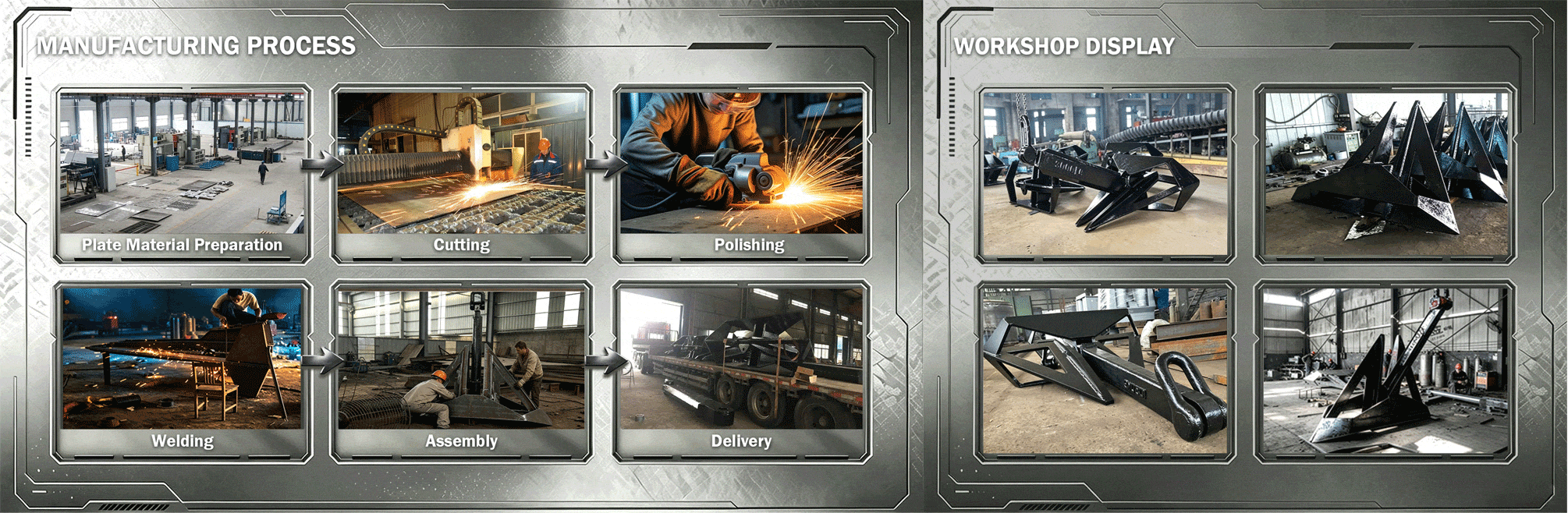
A Delta Flipper Anchor involves several production steps, including steel plate cutting, fabrication, welding, machining, fitting, assembly, surface treatment and final inspection.
The production facility needs to have suitable equipment and experience with large fabricated steel components. Just as important, the work needs to be checked during fabrication rather than only at the end.
For Richmax orders, production is coordinated with the selected manufacturing facility according to the approved drawing and agreed technical requirements. Depending on the order, key dimensions and connection details can be checked during fabrication. Welding, assembly and finished dimensions are checked before the anchor is released for shipment.
| Typical Final Checks |
| Main dimensions and overall weight | Shank and fluke dimensions | Plate thickness and component arrangement | Connection holes, pins and fittings |
| Welding condition | Surface treatment and coating | Identification marks | Required inspection and material documents |
For the buyer, this means the inspection is linked to the actual drawing and purchase requirements, rather than being limited to a general visual check.
Classification Society and Inspection Requirements
Not every marine anchor order has the same certification requirements.
One project may require material certificates and dimensional inspection. Another may involve a classification society, third-party inspection, non-destructive testing, specific welding requirements or additional project documentation.
These requirements need to be known before production starts.
Richmax can coordinate the required inspection and documentation according to the project specification. Where class or third-party inspection is required, the inspection scope, approved drawings, material requirements and inspection points are confirmed in advance.
This is important for project orders because certification cannot always be added at the end. If a particular inspection needs to be witnessed during production, the production schedule has to allow for it.
We therefore confirm the required certification and inspection scope before placing the production order, rather than assuming that one standard certificate will cover every project.
Production Capacity and Delivery
For a shipyard or offshore contractor, an anchor is often one item in a much larger project schedule. A delayed anchor can affect installation or vessel delivery.
When checking a supplier, buyers should therefore ask where the anchor will be produced, whether the required steel and components are available, how long fabrication will take, and how inspection, coating and shipment fit into the delivery schedule.
Richmax coordinates the different stages of the order, including material purchasing, fabrication, machining, inspection, surface treatment, packing and shipment.
For larger or customized anchors, the lead time is normally discussed according to the actual production scope. Inspection and certification requirements are also considered when confirming the delivery date.
This is different from treating the anchor as a standard stock item when the product actually needs to be fabricated for a specific project.
Handling Problems Before and After Delivery
Problems can happen in any fabricated steel product. What matters is whether the supplier can identify the cause and deal with it properly.
If a dimensional problem, documentation issue, coating problem, missing component or transportation damage is found, the first step is to check the actual order information — drawing, specification, material records, inspection records and photographs.
Richmax can work with the production facility to investigate the issue and provide the relevant records. Depending on the situation, the solution may involve rework, replacement of a component, additional inspection, document correction or another solution agreed with the buyer.
Keeping production and inspection records is particularly useful here. It allows the problem to be checked against the actual order instead of trying to solve it from a photograph alone.
For problems identified before shipment, we prefer to deal with them at the factory whenever possible. It is much easier to correct a fabrication or documentation issue before the anchor is packed and shipped to the destination port.
Where Richmax Fits in the Supply Chain
Richmax is not limited to taking an anchor model from a catalogue and forwarding the price to the buyer.
For Delta Flipper Anchor orders, we work with the customer's drawing and project requirements and coordinate the manufacturing, inspection, documentation and shipment stages with the appropriate production facilities.
This is particularly useful when the buyer needs:
Production according to an approved drawing
Non-standard dimensions or anchor weight
Specified steel grade or material documentation
Classification society or third-party inspection
Welding or NDT requirements
Specific surface treatment
Inspection and material records
Export packing and shipment coordination
The manufacturing work is carried out at the appropriate production facility. Our role is to keep the technical and commercial requirements connected throughout the order and to communicate with the buyer when a production or specification issue needs to be clarified.
For the buyer, this avoids having to separately coordinate every production detail with different factories.
Our Manufacturing Process and Our Workshop:
What Should a Buyer Chaeck Before Ordering?
Before confirming a Delta Flipper Anchor supplier, it is useful to ask a few straightforward questions:
Can the anchor be manufactured from our approved drawing?
Who will actually manufacture the anchor?
What steel grade will be used?
Can the material be traced back to the relevant certificates?
How are dimensions and welding checked during production?
Can third-party or classification society inspection be arranged?
What inspection documents will be supplied?
What is the actual production lead time?
How are customized anchors handled?
What happens if a problem is found before shipment?
Who will handle the issue if the finished anchor does not match the agreed specification?
The answers to these questions usually tell a buyer more than a supplier's general claims about quality or experience.
For a quotation, send us the anchor drawing or technical specification, required quantity, material requirements, inspection or class requirements, and delivery destination. We can check the production and documentation scope before confirming the order.
FAQ
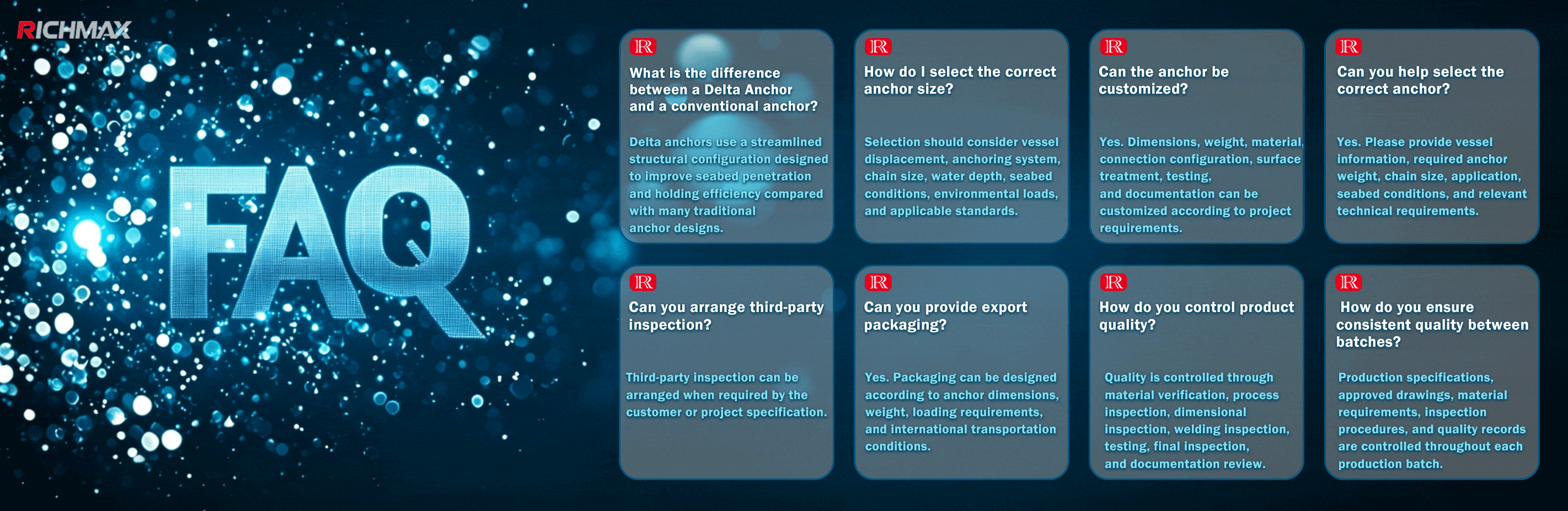
1. What is the difference between a Delta Anchor and a conventional anchor?
Delta anchors use a streamlined structural configuration designed to improve seabed penetration and holding efficiency compared with many traditional anchor designs.
2. How do I select the correct anchor size?
Selection should consider vessel displacement, anchoring system, chain size, water depth, seabed conditions, environmental loads, and applicable standards.
3. Can the anchor be customized?
Yes. Dimensions, weight, material, connection configuration, surface treatment, testing, and documentation can be customized according to project requirements.
4. Can you help select the correct anchor?
Yes. Please provide vessel information, required anchor weight, chain size, application, seabed conditions, and relevant technical requirements.
5. Can you arrange third-party inspection?
Third-party inspection can be arranged when required by the customer or project specification.
6. Can you provide export packaging?
Yes. Packaging can be designed according to anchor dimensions, weight, loading requirements, and international transportation conditions.
7. How do you control product quality?
Quality is controlled through material verification, process inspection, dimensional inspection, welding inspection, testing, final inspection, and documentation review.
8. How do you ensure consistent quality between batches?
Production specifications, approved drawings, material requirements, inspection procedures, and quality records are controlled throughout each production batch.

 English
 Español
 Français
 Árabe
Árabe
 Русский
 Português
 日本語
日本語
 한국어
한국어
 Dansk
Dansk
 Nederlands
 Italiano
 Türkçe
 Deutsch
 Prancis
 ไทย
ไทย
 Tiếng Việt
 हिंदी
हिंदी
 বাংলা
বাংলা
 中文
中文