Structure
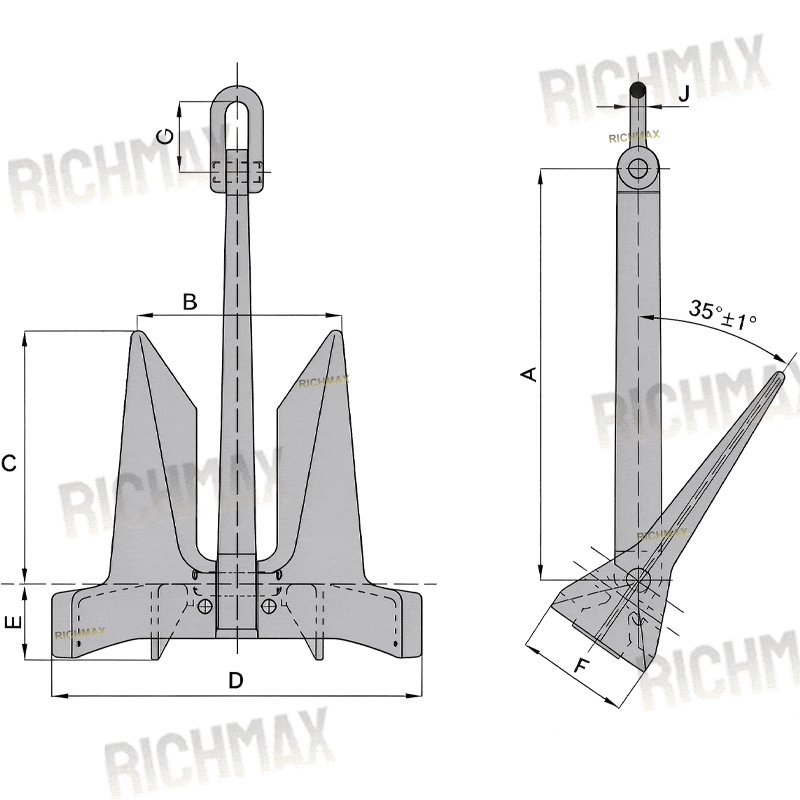
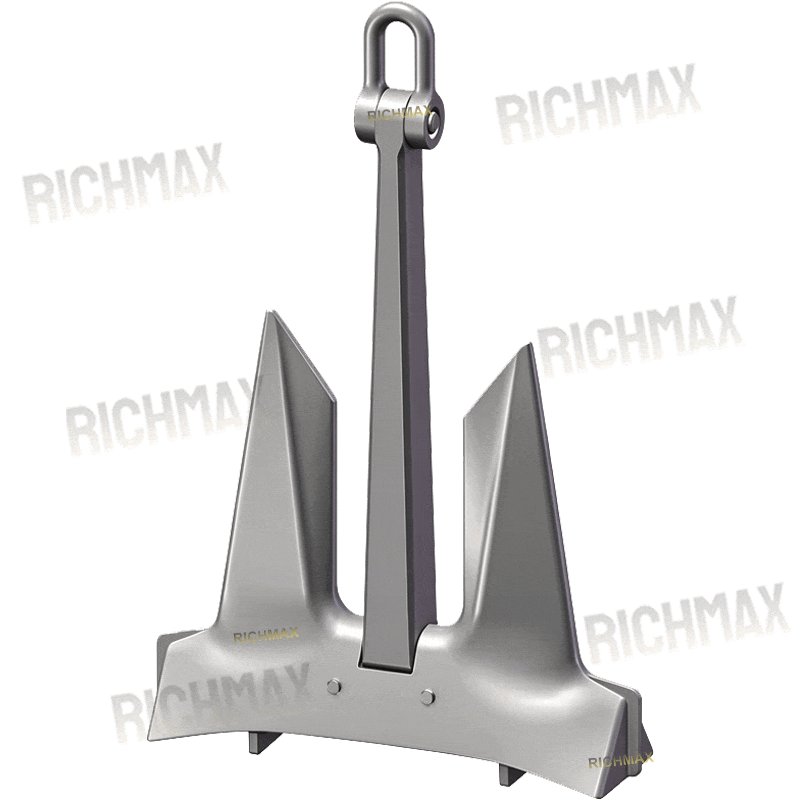
The AC-14 High Holding Power Anchor is a stockless HHP anchor designed with a movable fluke assembly and a broad crown section. Its structure allows the anchor to change orientation during seabed contact and develop holding resistance after penetration. Compared with conventional stock anchors, the stockless configuration is suitable for vessels using a hawse pipe and anchor pocket, provided the anchor dimensions match the vessel's arrangement.
The performance of an AC-14 anchor depends on its geometry, manufacturing quality, seabed conditions and compatibility with the vessel's anchoring system. Each structural component should therefore be assessed against the approved drawing and specified service requirements.
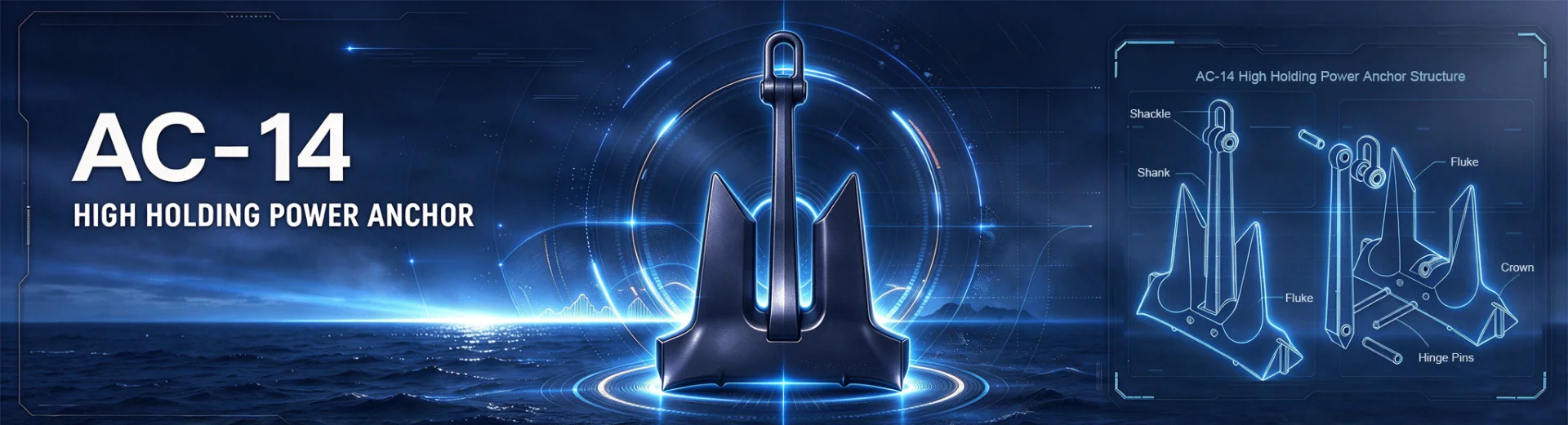
1. Shank
The shank transfers the load from the anchor chain connection to the crown and fluke assembly. In an AC-14 design, the shank and its connection to the crown form the main load-bearing structure.
The shank profile, cross-section and alignment affect the anchor's structural strength and its interaction with the flukes during setting. Depending on the approved design, the shank may be cast or manufactured using another specified process. Buyers should verify the material grade, dimensional tolerances and inspection requirements rather than assume that all AC-14 anchors use the same manufacturing method.
2. Flukes
The paired flukes provide the working surfaces that penetrate the seabed and generate holding resistance. Their profile, angle, surface area and relationship to the shank determine how the anchor engages with the surrounding soil.
The flukes are designed to work in suitable seabed materials where penetration can occur. In loose sand, clay and other penetrable soils, the anchor may develop holding resistance as the flukes embed under load. Performance can be less reliable on exposed rock, hard reef or seabeds containing large obstructions, where the flukes may not penetrate properly.
The fluke profile and any reinforcing ribs should match the approved design. Changes to their thickness, angle or shape can affect both penetration and holding behaviour.
3. Crown Section
The crown connects the shank to the fluke assembly and helps guide the anchor into its working position during seabed contact. Its shape and mass distribution influence how the anchor settles, rotates and begins to penetrate.
The crown also forms a load-transfer area between the shank and flukes. Its geometry, material quality and manufacturing accuracy are therefore important to the finished anchor's structural integrity.
For large AC-14 anchors, the inspection plan should reflect the actual production process. Where cast components are used, appropriate inspection should address the risk of internal casting defects as well as visible surface imperfections. Visual inspection alone cannot establish the absence of internal porosity or shrinkage defects; additional examination should follow the agreed specification and acceptance criteria.
4. Anchor Connection Point and Fluke Pivot
The upper connection accommodates the specified anchor shackle or other approved chain connection. Its opening, pin diameter, bearing surfaces and clearances must match the connecting hardware.
The fluke pivot allows the flukes to move relative to the main anchor structure within the limits of the design. This movement supports the anchor's setting behaviour, but the pivot pin and its bearing surfaces are also areas requiring attention during inspection and maintenance.
Wear, deformation, corrosion or restricted movement can affect the connection and fluke operation. Buyers should confirm the specified pin dimensions, retaining arrangement, material requirements and inspection criteria, particularly for anchors intended for demanding service conditions.
5. Stockless Design and Vessel Compatibility
The stockless configuration removes the transverse stock found on traditional stock anchors. This makes the AC-14 suitable for installation in compatible anchor pockets and hawse-pipe arrangements, helping the anchor fit within the vessel's bow structure when properly designed for that installation.
However, stockless construction does not automatically guarantee compatibility with every vessel. The anchor's overall dimensions, crown and fluke profile, shank arrangement and connection geometry must be checked against the available anchor recess, hawse pipe and windlass arrangement.
For replacement orders, buyers should compare the new anchor with the vessel's approved drawings or the dimensions of the existing anchor. Nominal weight alone is not sufficient to confirm fit.
6. Structural Inspection and Design Limitations
Inspection of an AC-14 High Holding Power Anchor should cover dimensional accuracy, material conformity, structural condition and the operation of the movable fluke assembly. Particular attention should be given to the crown, shank connections, pivot pin area and any cast or welded sections.
For cast components, internal defects may not be visible during a routine visual examination. Non-destructive testing should be selected according to the component design, manufacturing process and agreed inspection requirements. Where applicable, material traceability, mechanical test results and dimensional records should also be reviewed.
The AC-14 is not equally suitable for every seabed. Its holding performance depends on the ability of the flukes to penetrate and develop resistance in the specified soil. On rocky or reef-covered seabeds, penetration may be limited and anchor dragging may occur under load. The suitability of the anchor should therefore be assessed as part of the complete anchoring system, taking account of vessel requirements, seabed conditions and expected loading.
Material
The material of an AC-14 High Holding Power Anchor directly affects its structural strength, impact resistance, wear resistance and service life. Depending on the approved design and manufacturing method, the anchor body may be produced from cast steel or fabricated steel sections. Material grade, heat treatment and inspection requirements should be specified according to the purchase order, applicable standards and classification requirements.
1. Steel Strength and Toughness
The anchor body requires sufficient strength to withstand loads transmitted through the shank and flukes during deployment, seabed engagement and retrieval. Suitable marine-grade steel provides the mechanical properties needed for these operating conditions.
Strength and toughness must be considered together. Adequate toughness helps the material resist crack initiation and propagation under impact or fluctuating loads, while appropriate ductility allows it to accommodate local stresses without premature failure. The specified steel grade and mechanical properties should be verified against the approved design and relevant material standards.
2. Heat Treatment and Material Stability
For cast steel components, the specified heat treatment may include normalizing or quenching and tempering, depending on the steel grade, casting section and required mechanical properties. A properly controlled process helps establish a suitable microstructure and improve the consistency of mechanical performance.
Heat treatment also affects toughness and residual stress. Where low-temperature service is expected, impact testing should be carried out at the temperature specified by the applicable standard or project requirements. This is particularly important for anchors intended for cold-water or offshore applications where impact resistance is a design consideration.
3. Corrosion Protection for Marine Service
An AC-14 High Holding Power Anchor used in seawater is exposed to moisture, dissolved salts and mechanical contact with the seabed. Surface preparation followed by a suitable marine coating system helps reduce corrosion during storage, transportation and service.
Depending on the operating environment and project specification, protection may include abrasive blasting and an epoxy-based coating system or other approved marine-grade coatings. Thermal-sprayed zinc may also be considered where the design and coating specification permit it.
Coatings can be damaged when the anchor contacts rocks, gravel or other abrasive seabed materials. Exposed steel may then corrode more rapidly, so coating condition should be checked during maintenance and damaged areas repaired in accordance with the specified coating system.
4. Pin Material and Wear Resistance
Where the AC-14 anchor design incorporates a separate hinge pin, the pin material must provide suitable strength, toughness and resistance to wear at the connection. Forged alloy steel may be specified where its mechanical properties and manufacturing characteristics meet the design requirements.
The pin diameter, fit, surface finish and retention arrangement also affect the movement of the flukes and the durability of the connection. Material selection alone cannot ensure reliable operation; dimensional control, machining quality and inspection of the assembled connection are equally important.
5. Material Quality and Traceability
The quality of an AC-14 High Holding Power Anchor depends on both the specified material and the controls applied during manufacturing. Cast steel components should be inspected for relevant casting defects, while welded structures require appropriate control of welding procedures and fabrication quality.
Depending on the approved inspection plan, verification may include visual inspection, dimensional checks and non-destructive testing using suitable methods such as magnetic particle, ultrasonic or radiographic testing. The method and acceptance criteria should be determined by the component, material, design and applicable specification.
Material certificates, heat numbers, mechanical test results and heat-treatment records help establish traceability between the supplied material and the finished anchor. Where classification approval is required, the material, manufacturing and inspection documentation should meet the requirements of the specified classification society and project.
How To Use?
The AC-14 High Holding Power Anchor is used in a vessel's anchoring system. Correct operation involves checking the anchor and its connections, controlling deployment, confirming holding conditions and inspecting the equipment after recovery. Actual performance depends on the approved anchor design, seabed characteristics, anchor chain arrangement and operating conditions.
1. Pre-Deployment Inspection
Before lowering the anchor, inspect the shank, crown, flukes, connecting pin and other load-bearing components for cracks, deformation, excessive wear or other visible defects. Check the condition of the protective coating and confirm that the connecting pin is correctly fitted and secured.
Verify that the anchor, connecting shackle and anchor chain match the vessel's approved equipment arrangement. The anchor pocket, hawse pipe and related equipment should be clear of obstructions to allow the anchor to move freely during deployment and recovery.
2. Controlled Anchor Deployment
Deploy the AC-14 anchor using the vessel's designated anchoring equipment and operating procedures. Vessel speed should be controlled, and the anchor chain should be paid out in a manner that avoids uncontrolled release, excessive impact or sudden loading.
The anchor's fluke and crown geometry is intended to support the required setting behaviour, but correct positioning and penetration still depend on seabed conditions and the method of deployment. Once the anchor reaches the seabed, pay out the required chain length according to the approved anchoring plan rather than relying on the anchor model alone.
3. Anchor Setting and Holding Verification
After deployment, allow the anchor to develop holding resistance in accordance with the vessel's operating procedure. Monitor the vessel's position, heading and anchor chain behaviour to identify signs of dragging or unexpected movement.
Anchor chain scope should be determined with reference to water depth, expected wind and current loads, vessel characteristics and the approved anchoring arrangement. Adequate chain scope helps maintain a suitable load direction at the anchor, while insufficient scope or excessive vertical loading may reduce holding performance.
If the anchor does not appear to hold, reassess the anchoring conditions and follow the vessel's established response procedure. Do not assume that the nominal anchor weight or HHP designation guarantees a particular holding capacity in every seabed condition.
4. Anchor Recovery and Stowage
During recovery, retrieve the anchor chain using the designated windlass and follow the vessel's procedures for controlling chain tension and anchor movement. If the anchor encounters unusual resistance, investigate the cause before applying additional pulling force.
An anchor that is caught on rocks, debris or underwater infrastructure may be subjected to loads beyond those intended for normal recovery. Forcing the anchor free can damage the shank, flukes, connecting components or anchor chain.
After the anchor has been recovered, confirm that it is correctly positioned and secured in the anchor pocket or designated stowage arrangement. Remove accumulated mud and debris where appropriate, and inspect the anchor for signs of impact, deformation or abnormal wear.
5. Routine Maintenance and Service Checks
Following use, inspect the connecting pin, pin retention arrangement, flukes, crown and shank for wear, looseness or damage. Check for coating damage and corrosion, particularly around connection points, contact areas and locations where seabed abrasion may occur.
Lubricate movable components only where required by the manufacturer's instructions. Record any defects and arrange further inspection or repair when the findings exceed the applicable acceptance criteria.
Regular inspection helps identify deterioration before the anchor is returned to service. Any repair involving structural components, welding or changes to the original configuration should follow the approved repair requirements.
6. Operating Conditions to Avoid
The AC-14 anchor should be used within the conditions established by its approved design and the vessel's anchoring plan. Hard rock, exposed reef and other seabeds that do not permit adequate fluke penetration may prevent the anchor from developing the required holding resistance.
Uncontrolled chain release, inadequate chain scope, incompatible connecting hardware and recovery against an obstruction can place excessive loads on the anchor and associated equipment. These conditions should be avoided through proper planning, controlled operation and inspection.
The anchor should not be returned to service if cracks, significant deformation, damaged pins or other defects affecting structural integrity are identified. The equipment should be assessed in accordance with the applicable inspection and maintenance requirements before reuse.
Application
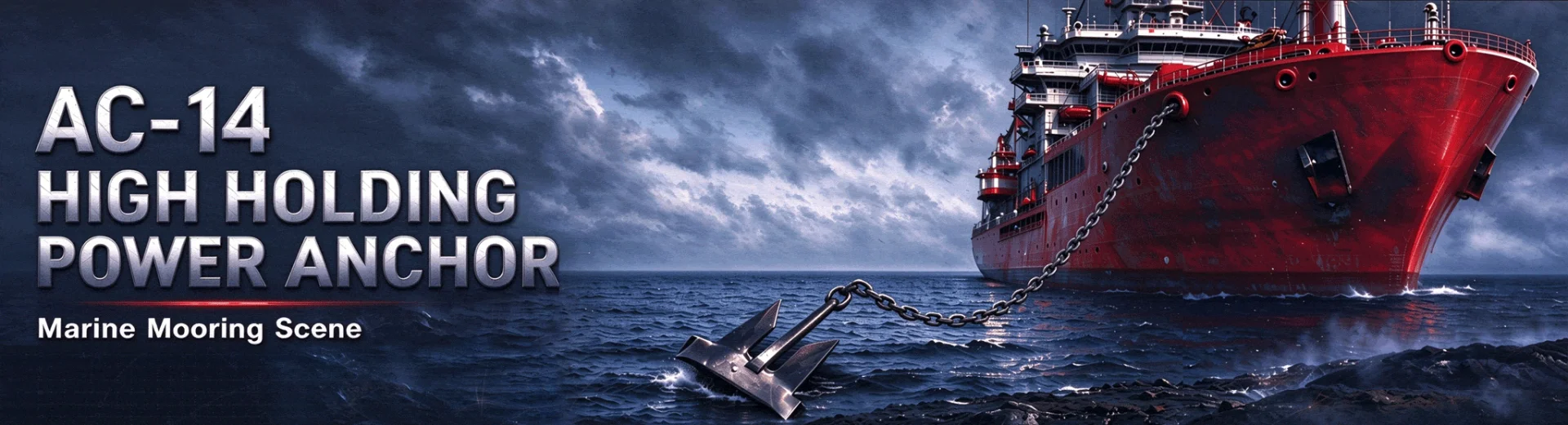
The AC-14 High Holding Power Anchor may be used on commercial vessels and selected marine engineering projects where its approved design, holding characteristics and connection arrangement meet the requirements of the anchoring system. Its suitability depends on the anchor weight, seabed conditions, environmental loads and intended operating duty. The anchor should be selected according to the vessel's approved equipment arrangement or project-specific engineering requirements.
Applications:
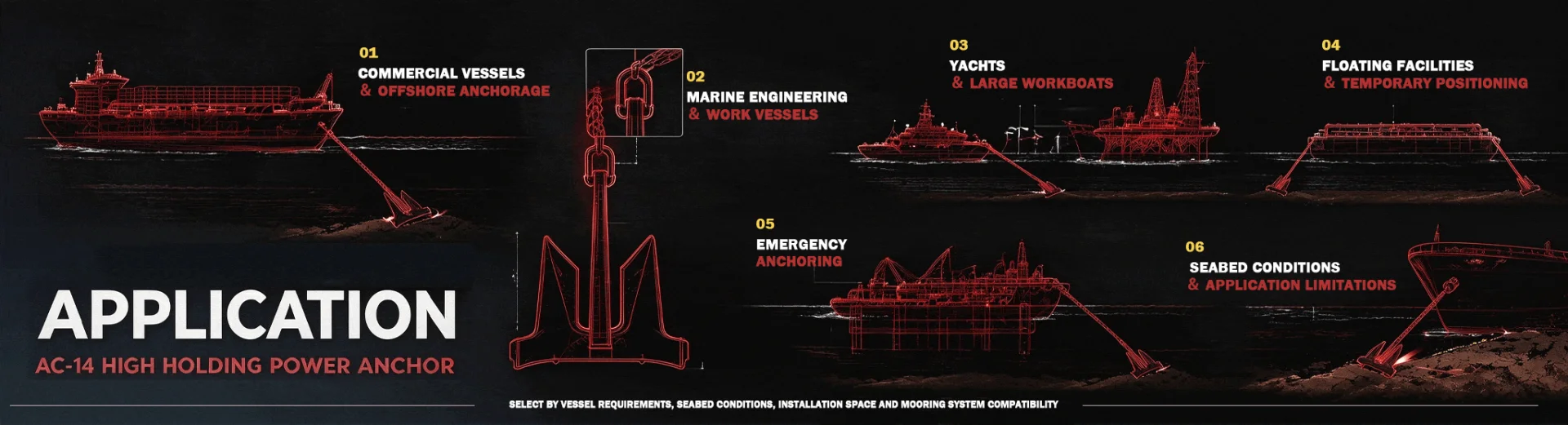
1. Commercial Vessels and Offshore Anchorage
The AC-14 HHP Anchor may be specified for container ships, bulk carriers, tankers and other commercial vessels requiring anchoring equipment for designated offshore or coastal anchorages. In suitable sand, clay or muddy seabeds, the anchor's fluke design allows it to penetrate the seabed and develop holding resistance under the specified loading conditions.
For vessels remaining at anchor for extended periods, selection should consider wind, waves, current, water depth, seabed properties and the loads transmitted through the anchor chain. Holding performance cannot be determined by the HHP designation or anchor weight alone. The complete anchoring arrangement must meet the vessel's applicable equipment requirements.
2. Marine Engineering and Work Vessels
Offshore supply vessels, crane vessels, dredgers and other marine work vessels may use AC-14 anchors for anchoring operations or temporary positioning where the anchor type is accepted by the vessel or project design.
For these applications, the required holding resistance, operating duration, seabed conditions and expected environmental loads should be assessed before selection. Where a vessel uses multiple anchors for positioning or working operations, the anchor arrangement and loading conditions must be evaluated as part of the complete system.
3. Yachts and Large Workboats
The AC-14 Anchor may be considered for suitable medium-sized or large vessels operating in coastal waters, provided that the anchor weight, dimensions and holding requirements match the vessel's approved anchoring arrangement.
Its stockless configuration may simplify stowage in a compatible bow anchor pocket or hawse arrangement and reduce interference associated with a projecting stock. However, actual stowage suitability depends on the anchor's dimensions, shank geometry, bow fitting and available clearance. The AC-14 model should not be assumed suitable for every yacht or workboat solely because of its stockless design.
4. Floating Facilities and Temporary Positioning
Selected floating facilities, including floating docks and temporary floating pipeline installations, may require anchors for positioning or temporary restraint. An AC-14 HHP Anchor may be considered where its design and documented performance are suitable for the seabed and the loads imposed by the floating structure.
Soft sediment, sand and clay may provide suitable penetration conditions, depending on soil properties and anchor geometry. However, temporary positioning of floating structures is not automatically equivalent to conventional vessel anchoring. Buyers should verify whether the AC-14 anchor is qualified for the intended duty, particularly where sustained loads, changing load directions or significant environmental forces are involved.
5. Emergency Anchoring
An AC-14 HHP Anchor may serve as part of a vessel's emergency anchoring equipment where the anchor and associated chain arrangement meet the vessel's approved requirements. Its ability to develop holding resistance depends on seabed contact, deployment conditions, available scope and the loads acting on the vessel.
The anchor's geometry may support correct orientation and penetration under suitable conditions, but successful deployment is not guaranteed in every situation. Emergency anchoring procedures should follow the vessel's operating instructions and account for water depth, available sea room, seabed characteristics and the condition of the anchoring equipment.
6. Seabed Conditions and Application Limitations
Suitable seabed conditions
The AC-14 HHP Anchor may perform effectively in suitable sand, clay and muddy seabeds when its design and operating conditions allow the flukes to penetrate and develop the required holding resistance. Actual performance varies with soil strength, sediment layering, anchor orientation, installation method and applied loads.
Rocky, hard or gravel seabeds
Solid rock, hard compacted ground and coarse gravel may prevent adequate fluke penetration. In these conditions, the anchor may fail to develop the required holding resistance or may drag under load. A different anchor type or an engineered anchoring solution may be more appropriate.
Seabeds containing debris or subsea infrastructure
Areas containing wreckage, discarded equipment, subsea cables, pipelines or other obstructions require particular care. The anchor may snag during deployment or recovery, and contact with subsea infrastructure can cause damage. Site information and exclusion zones should be reviewed before anchoring.
Shallow water with breaking waves
In very shallow water exposed to breaking waves and severe vessel motion, repeated changes in load direction and dynamic loading can reduce anchoring stability. The AC-14 designation alone does not establish suitability for these conditions. The complete anchoring system should be assessed against the expected environmental loads and operating limits.
Applications requiring reduced anchor weight
Where reducing anchor mass, bow loading or handling requirements is a priority, the AC-14 should be compared with alternative anchor designs based on verified holding performance, approved equipment requirements, dimensions and total system weight. A lighter anchor should not be substituted solely on the basis of nominal weight or a claimed holding-power ratio.
7. Confirm Application Suitability Before Ordering
Before purchasing an AC-14 High Holding Power Anchor, buyers should confirm the required model and design revision, nominal weight, overall dimensions, chain connection, material specification, certification requirements and intended operating conditions. For offshore mooring or other specialized duties, the anchor must have the design approval and documented performance required by the project.
The AC-14 HHP designation should not be treated as automatic approval for permanent offshore mooring, every seabed type or all-weather anchoring. Final suitability should be established against the vessel's approved anchoring arrangement or the project's engineering specifications.
How To Choose?
Selecting an AC-14 High Holding Power Anchor involves checking the vessel's anchoring requirements, seabed conditions, installation space and compatibility with the existing anchoring system. The anchor type and weight should be confirmed against the approved vessel specification or project design rather than selected by weight or holding-power designation alone.
1. Match the Anchor to Vessel Requirements
For commercial vessels, anchor selection should follow the applicable vessel equipment requirements, approved drawings and relevant classification rules. Vessel dimensions, displacement, windage and operating conditions may affect the required anchoring equipment, depending on the applicable design criteria.
Confirm the specified anchor weight and model against the vessel's equipment list. For replacement projects, compare the proposed AC-14 anchor with the original equipment dimensions and approval requirements before confirming the order.
2. Evaluate Seabed Conditions
The suitability of an AC-14 High Holding Power Anchor depends on its ability to penetrate and engage with the seabed. Mud, clay and sand may provide suitable conditions, depending on soil strength, density and the anchor's design. Hard ground, gravel, rock or mixed seabed conditions may affect penetration and holding performance.
For vessels operating in exposed anchorages or areas affected by strong currents, waves and wind, the anchoring arrangement should be assessed against the expected environmental loads. Where seabed conditions vary significantly, obtain advice from the responsible marine engineer or anchoring-system designer.
3. Check Compatibility with the Anchoring System
An AC-14 anchor must fit the vessel's complete anchoring arrangement. Check the anchor's overall dimensions, shank geometry, fluke movement and connection points against the available hawse pipe, anchor pocket or stowage arrangement.
The connecting shackle, anchor chain and other specified fittings must also be compatible in dimensions and load capacity. Verify pin diameter, connection clearance and the permitted movement of articulated components. For replacement orders, dimensional compatibility should be confirmed before manufacturing or shipment.
4. Confirm Certification and Traceability
Certification requirements depend on the vessel, classification society, project specification and intended service. Before ordering, confirm whether the AC-14 High Holding Power Anchor requires classification approval, product certification, witnessed inspection or other specified documentation.
Where required, review material certificates, manufacturing records, applicable nondestructive testing reports and inspection documents. Material markings and identification numbers should be consistent with the relevant records so that the supplied anchor can be traced to the agreed specification.
The HHP designation alone does not establish that a particular anchor has completed the required approval or holding-power tests. Confirm the applicable test basis and acceptance criteria with the supplier.
5. Review Material and Surface Protection
The anchor's material grade and manufacturing route should comply with the approved design and purchase specification. Depending on the design, the anchor body may use cast or fabricated steel, while pins and connecting components may require different material specifications.
For marine service, select the surface preparation and protective coating according to the storage environment, exposure conditions and project requirements. Abrasive blasting followed by a specified marine coating system may be appropriate where required. The coating should not interfere with pin movement, connection clearances or other functional dimensions.
6. Consider Operating Conditions and Equipment Capacity
For vessels that anchor frequently, remain at anchor for extended periods or operate in exposed locations, assess the anchor as part of the complete anchoring system. Expected wind, waves, currents, water depth, seabed conditions and the required holding capacity should all be considered.
The windlass, chain stopper, anchor chain and associated fittings must be suitable for the specified equipment and operating loads. Increasing anchor weight does not automatically improve the overall system if the existing windlass, chain arrangement or stowage space cannot accommodate the change.
7. Avoid Common Selection Errors
Several issues can lead to an unsuitable anchor selection:
Selecting by weight alone: Anchors with the same nominal weight may have different geometries, dimensions and performance characteristics.
Ignoring seabed conditions: An anchor that performs well in penetrable soil may not provide the expected holding performance on hard or rocky ground.
Overlooking stowage dimensions: An anchor that does not fit the hawse pipe or anchor pocket can create problems during recovery and securing.
Accepting incomplete documentation: Missing certificates or inspection records may prevent the supplied product from meeting project acceptance requirements.
Exceeding equipment capacity: A heavier anchor or incompatible connection arrangement may place additional demands on the windlass, chain and associated fittings.
These checks should be completed before approving a substitute anchor or changing the original equipment specification.
8. Information Required for Anchor Selection
When requesting an AC-14 High Holding Power Anchor quotation, provide the following information where available:
Required anchor type, nominal weight and quantity
Vessel particulars or project design reference
Approved drawing, dimensions or existing anchor model
Anchor chain and connecting shackle specifications
Applicable classification society and certification requirements
Expected seabed and operating conditions
Material, inspection and testing requirements
Surface protection, packaging and delivery requirements
With these details, the supplier can assess the required configuration, confirm manufacturing scope and identify any technical information that needs to be clarified before production.
How To Choose A Reliable AC-14 HHP Anchor Supplier?
Selecting an AC-14 High Holding Power Anchor supplier requires more than comparing prices and delivery times. Buyers should evaluate the supplier's experience with the specified anchor design, control over manufacturing processes, material traceability, inspection arrangements and ability to deliver products that meet the purchase specification.
For shipyards, shipowners and offshore contractors, a suitable supplier should be able to explain how the anchor will be manufactured, inspected and documented before production begins.
1. Manufacturing Capability and Production Control
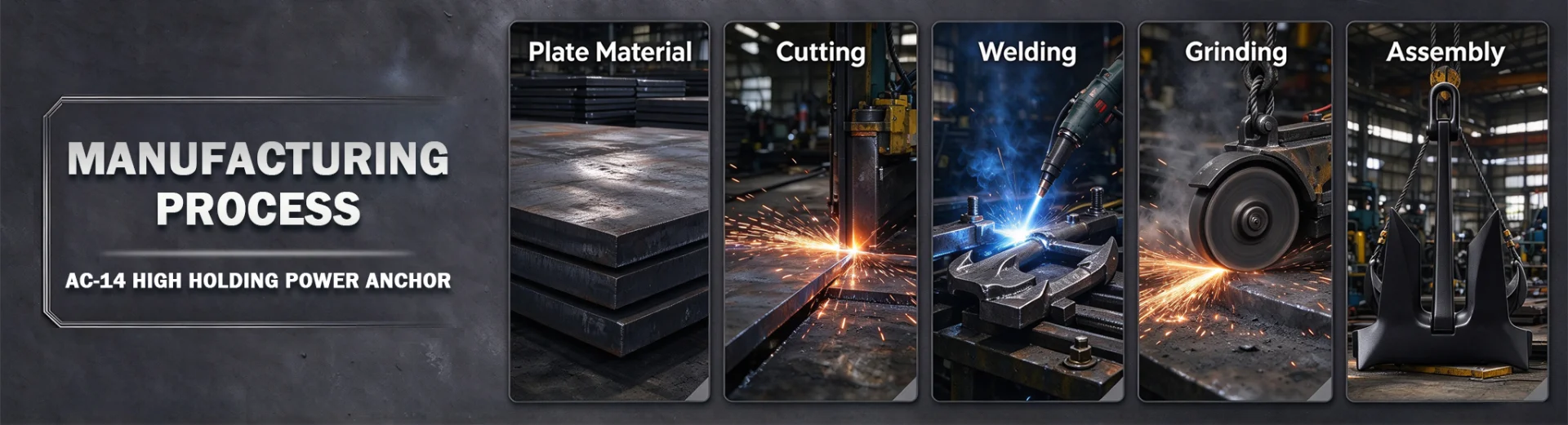
Start by identifying the actual manufacturer and the production facilities involved in the order. AC-14 HHP Anchor production may require casting, heat treatment, machining, dimensional correction, NDT and protective coating. The supplier should understand the requirements of each process and how they affect the finished anchor.
For cast steel anchors, particular attention should be given to casting quality, heat treatment records, structural dimensions and inspection of critical sections. Buyers should also confirm whether machining, NDT and coating are completed in-house or assigned to qualified subcontractors.
Richmax supplies marine hardware and equipment through an established manufacturing and export supply network. Its coordination of production resources, technical requirements and inspection arrangements helps buyers establish the manufacturing scope before placing an order. The actual production route and available facilities are confirmed according to the specified anchor design and order requirements.
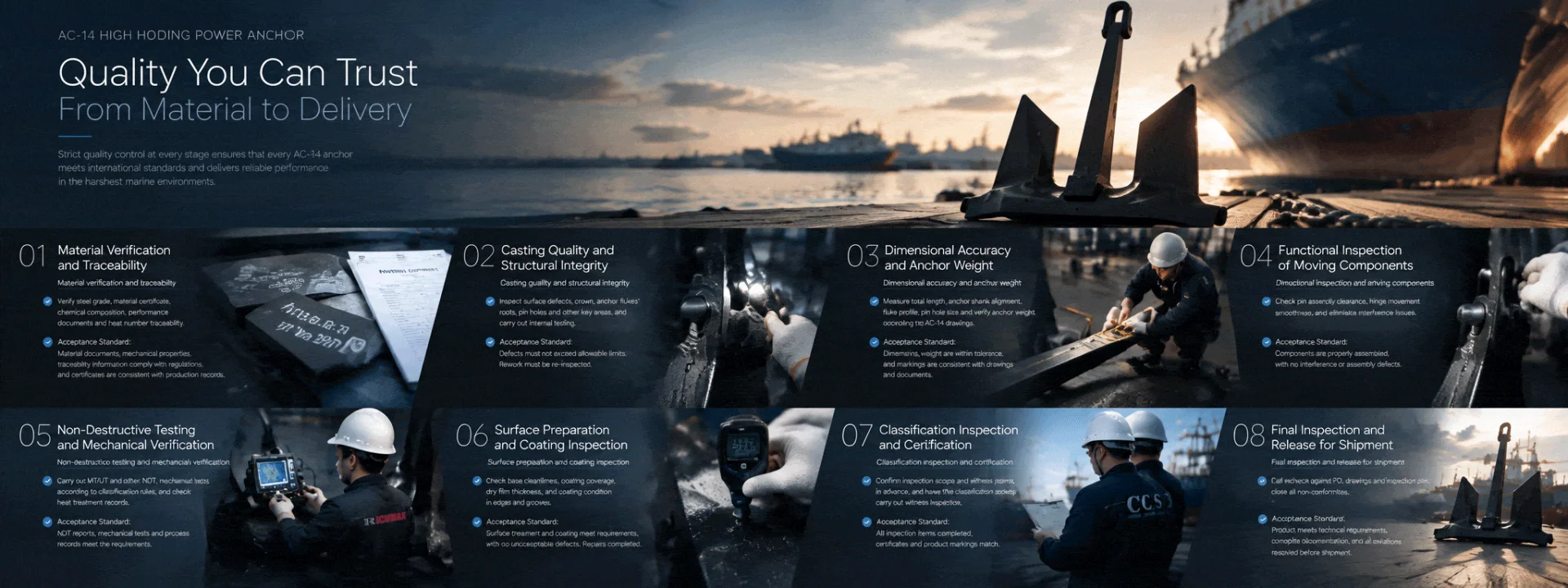
Our Manufacturing Process:
2. AC-14 Product Experience and Technical Understanding
Experience with the specific anchor type is more relevant than general experience supplying marine anchors. Buyers should confirm whether the supplier has handled the required AC-14 design, weight range, drawings and manufacturing specifications.
Technical review should cover the anchor's overall dimensions, shank and crown configuration, fluke movement where applicable, connecting arrangement and compatibility with the specified chain or joining shackle. Manufacturing tolerances and acceptance criteria should be based on the approved drawings and applicable requirements.
Previous supply records, inspection documents, reference projects or a factory visit can help buyers assess the supplier's practical experience. Where available, relevant commercial vessel or offshore project references provide additional evidence of experience with comparable requirements.
Richmax can coordinate the review of anchor drawings, dimensions, connection details and project-specific requirements before quotation. Buyers should provide the required design reference and technical documents so that the proposed supply scope can be evaluated against the actual application.
3. Classification Approval and Document Traceability
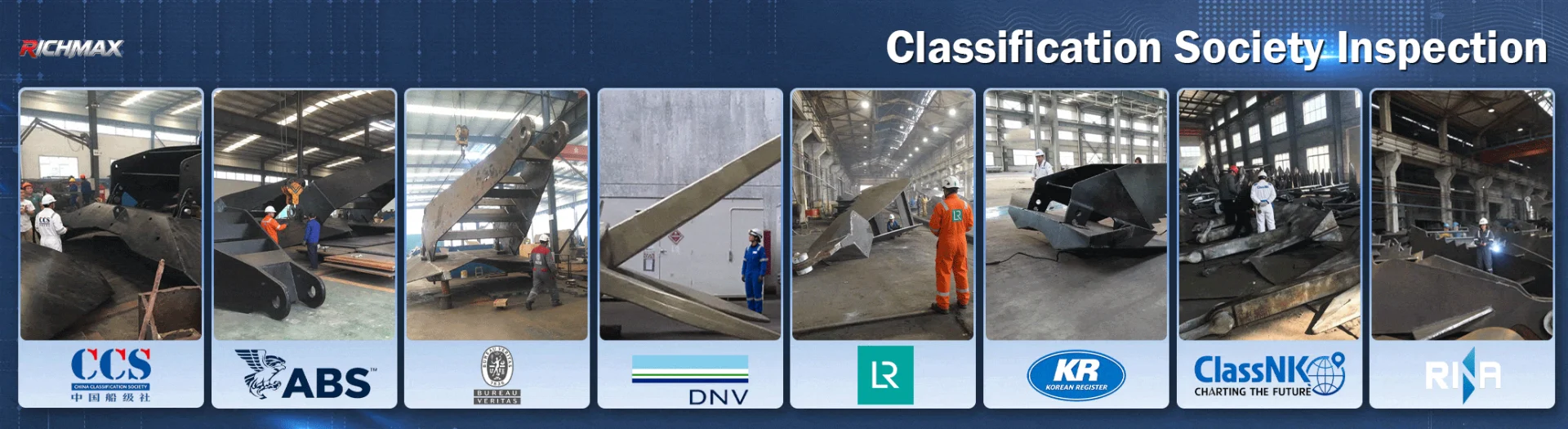
For orders requiring classification approval, buyers should verify the manufacturer's approval status with the relevant classification society, such as CCS, ABS, LR or DNV. The approval must cover the applicable product type, manufacturing facility and production scope; a general company certificate alone does not establish approval for every anchor.
Depending on the order, required documents may include material certificates, manufacturer inspection records, heat treatment records, NDT reports, dimensional inspection results and the applicable product certificate. The required document package should be agreed before production.
Material identification should remain traceable from the original material records through manufacturing and final inspection. Where third-party or classification survey is specified, the inspection stages and attendance requirements should also be confirmed in advance.
Richmax coordinates documentation and inspection requirements according to the confirmed purchase specification. The availability of a particular classification approval, original manufacturer's certificate or third-party inspection must be verified for the specific product and manufacturing source before an order is accepted.
Our Classification Society Inspection:
4. Quality Control and Inspection Coverage
A reliable supplier should be able to explain its inspection process rather than simply state that the product is quality controlled. For an AC-14 HHP Anchor, relevant checks may include incoming material verification, casting inspection, heat treatment control, dimensional measurement, visual examination and NDT of specified areas.
Ultrasonic testing (UT) and magnetic particle testing (MT) should be applied where required by the material, construction, approved inspection plan or applicable specification. Acceptance criteria must be established before testing; not every component necessarily requires the same method or inspection coverage.
Buyers should request inspection records that identify the product, inspection method, results and acceptance status. For classed or project-controlled orders, inspection hold points and witness points should be agreed before production starts.
Richmax can coordinate inspection requirements, documentation collection and agreed inspection arrangements across the relevant supply chain. This helps buyers establish clear responsibilities and review the required evidence before shipment.
5. Weight, Dimensions and Functional Verification
The finished anchor should conform to the approved design and specified weight. Buyers should not rely on the product name or nominal weight alone when verifying suitability for an anchoring system.
Inspection should cover the dimensions identified in the approved drawing, the connecting points and the movement or clearance of applicable components. Any specified functional, mechanical or load-related tests should follow the agreed technical requirements and applicable acceptance criteria.
Unexplained dimensional deviations, incomplete test records or discrepancies between the delivered product and its certificates should be resolved before shipment. These checks are particularly important when the anchor must fit existing chain, shackles, hawse arrangements or other vessel equipment.
Richmax can coordinate checks of the specified anchor weight, principal dimensions and connection details against the buyer's technical documents. This provides a practical basis for confirming supply requirements before manufacturing and dispatch.
6. Delivery Management and After-Sales Support
An anchor supplier's responsibility extends beyond manufacturing. Buyers should confirm the production schedule, inspection dates, export packaging, loading arrangements and documents included with the shipment. Due to the anchor's weight and geometry, packaging and handling plans should account for lifting, securing and protection of coated surfaces during transport.
The quotation should clearly state the supply scope, delivery terms, estimated lead time, inspection costs where applicable and any exclusions. Technical questions concerning drawings, connecting hardware or installation interfaces should be assigned to a responsible contact.
Richmax's marine export experience supports coordination between manufacturing resources, inspection requirements and international shipment arrangements. Before order confirmation, buyers can review the technical scope, documentation requirements and delivery conditions with Richmax to reduce avoidable discrepancies during production and export.
After-sales responsibilities and procedures for handling non-conformities should also be agreed in the purchase contract. Clear records, defined acceptance criteria and documented communication make it easier to investigate and resolve any issue arising from the delivered product.
7. Why Consider Richmax for AC-14 HHP Anchor Supply?
Qingdao Richmax Imp. & Exp. Co., Ltd. supplies marine hardware and equipment to international B2B customers, including buyers serving the commercial shipping and marine engineering sectors.
For AC-14 HHP Anchor inquiries, Richmax focuses on the requirements that determine whether the supplied product is suitable for the intended order:
Technical coordination: Review of the specified anchor type, nominal weight, drawings, dimensions and connection requirements.
Manufacturing resource coordination: Confirmation of the applicable production route and the facilities responsible for casting, machining, heat treatment, inspection and coating.
Quality documentation: Coordination of material traceability, inspection records and certificates required by the confirmed specification.
Inspection planning: Clarification of applicable NDT methods, acceptance criteria, classification requirements and third-party inspection arrangements.
Export delivery: Coordination of packaging, shipping documentation, loading requirements and delivery schedules.
As an affiliated company of Hiking Group Global Industrial Limited, Richmax can draw on a wider industrial supply network when coordinating suitable manufacturing resources. The actual production facilities, approval status, inspection scope and available documentation are confirmed for each order rather than assumed from the company relationship alone.
For buyers, the objective is straightforward: establish the technical requirements, manufacturing responsibilities, inspection scope and delivery conditions before committing to the purchase.
To request a quotation, provide the AC-14 anchor drawing or design reference, required weight and quantity, material specification, applicable classification requirements, connection details and delivery destination. Richmax can then review the inquiry and clarify the applicable supply scope.
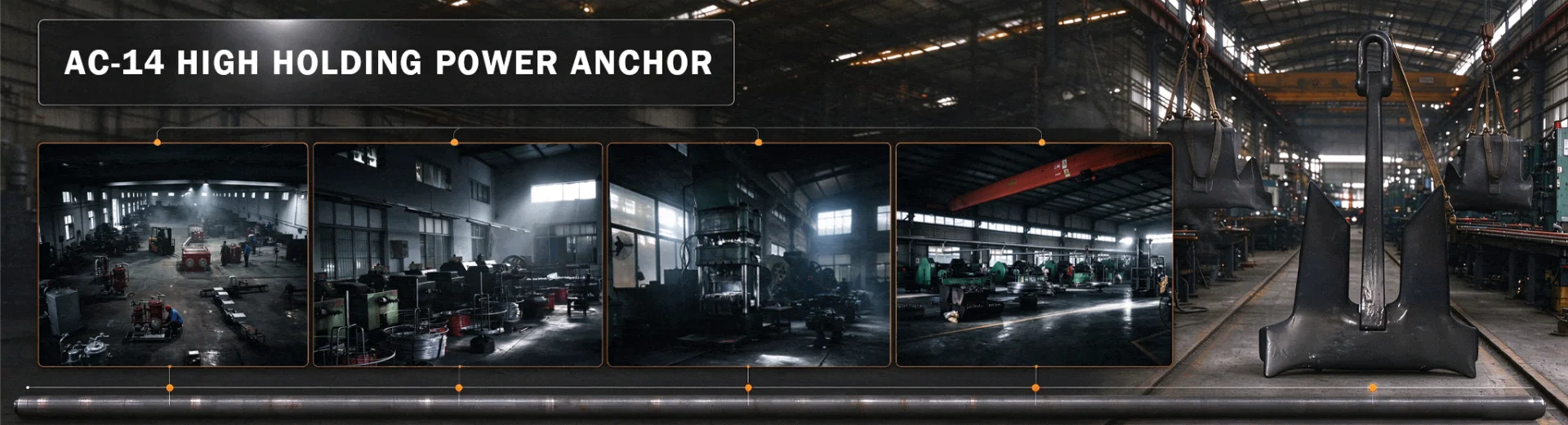
Our Workshop:
8. Supplier Evaluation: Questions to Resolve Before Ordering
Before selecting an AC-14 HHP Anchor supplier, buyers should obtain clear answers to the following questions:
Can the supplier identify the actual manufacturer and the facilities responsible for each production process?
Does the manufacturing source have the required product-specific classification approval, where applicable?
Can the supplied anchor be traced to its material records and required inspection documentation?
Are casting quality, heat treatment, dimensional tolerances and NDT requirements defined in the inspection plan?
Can the supplier demonstrate relevant experience with the specified AC-14 design and weight range?
Are the anchor's weight, dimensions and connecting arrangements consistent with the approved drawing?
Are the delivery schedule, export packaging, inspection responsibilities and non-conformity procedures clearly agreed?
A quotation that is substantially lower than competing offers should be reviewed against the same technical and commercial scope. Differences in material specifications, manufacturing processes, inspection coverage, certification and delivery terms can explain price variations. The important point is to compare equivalent requirements rather than price alone.
A supplier that provides clear technical answers, traceable documentation and defined manufacturing responsibilities offers buyers a stronger basis for evaluating the order before production begins.
FAQ
1. What is an AC-14 High Holding Power Anchor?
An AC-14 High Holding Power Anchor is a marine anchor type designed to develop holding resistance through interaction with the seabed. Its suitability depends on the approved design, anchor weight, seabed conditions and intended anchoring system.
2. What does HHP mean in AC-14 HHP Anchor?
HHP stands for High Holding Power. It describes an anchor classification associated with specified holding performance relative to anchor weight under defined approval or test conditions. The applicable standard and evidence of approval should be confirmed for the supplied product.
3. What are the main components of an AC-14 anchor?
The main components generally include the shank, flukes, crown section and anchor connection point. The exact construction details depend on the approved design and manufacturer’s drawings.
4. What material is used for an AC-14 High Holding Power Anchor?
The material depends on the approved design, manufacturing process and purchase specification. Cast steel, forged components or fabricated steel may be used where permitted by the applicable design. The exact grade should be confirmed from the material specification and supporting documentation.
5. Which anchor weights are available?
Available weights depend on the manufacturer's production range and the required design. Buyers should specify the required nominal weight and request the corresponding dimensional drawing and technical specification before placing an order.
6. Can an AC-14 anchor be manufactured according to a drawing?
Manufacturing according to a customer drawing may be possible after technical review. The supplier should confirm drawing compatibility, manufacturing feasibility, material requirements, tolerances and any design approval restrictions before accepting the order.
7. Is the AC-14 anchor suitable for every seabed type?
No anchor should be assumed to provide the same holding performance in every seabed. Soil composition, seabed strength, penetration conditions and loading direction influence performance. Suitability should be assessed against the intended operating conditions and the applicable design basis.
8. Can an AC-14 HHP Anchor be used for offshore mooring?
Potentially, but only if the specific anchor design and documented performance meet the offshore project's requirements. Permanent mooring and other engineered offshore applications may require additional design verification, testing, installation procedures and project-specific approval.
9. What certificates are available for an AC-14 anchor?
The available documents depend on the manufacturing route, material specification, order requirements and applicable classification rules. Documents may include material certificates, dimensional inspection reports, test records and classification or third-party inspection documentation where required. The exact scope should be confirmed before ordering.
10. Does every AC-14 anchor require third-party inspection?
No. Inspection requirements depend on the purchase specification, vessel or project requirements and applicable rules. Some orders may require classification survey or third-party inspection, while others may be supplied with the agreed manufacturer's quality records.

 English
 Español
 Français
 Árabe
 Русский
 Português
 日本語
 한국어
 Dansk
 Nederlands
 Italiano
 Türkçe
 Deutsch
 Prancis
 ไทย
 Tiếng Việt
 हिंदी
 বাংলা
 中文