Structure
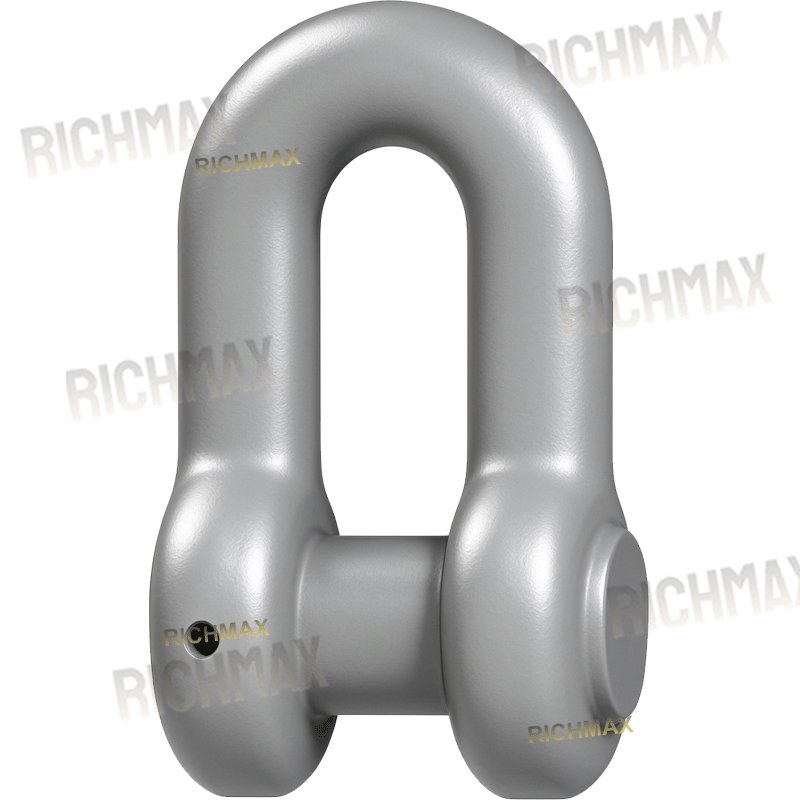
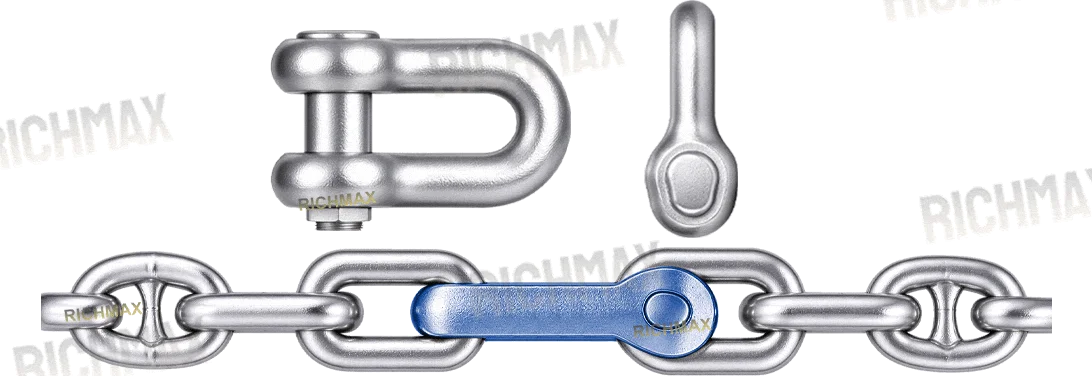
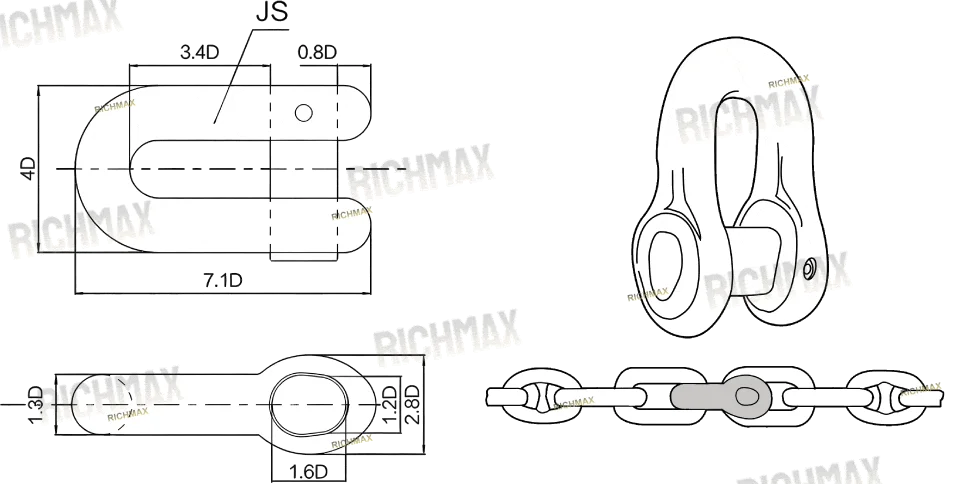
A Joining Shackle consists of a bow-shaped body, connecting pin and locking components. These parts form the mechanical connection between the assembled chain components.
The body and pin carry the loads transferred through the connection. Their dimensions, material properties and assembly condition directly affect the performance of the complete connection.
Bow-Shaped Body
The bow-shaped body is the main structural component of the Joining Shackle.
Its curved upper section provides space for the connected chain link or compatible connecting component. The lower sections form the pin connection area and support the connecting pin.
The body cross-section and internal dimensions determine the available connection space and fitting clearance.
During manufacturing, attention should be given to the body profile, cross-sectional dimensions and surface condition. These features must correspond to the approved product drawing.
Connecting Pin
The connecting pin is installed horizontally through the lower section of the shackle body.
It secures the assembled connection and transfers the loads acting on the connected components.
The pin diameter, length and fitting dimensions must match the shackle body design. The pin should fit correctly without excessive clearance or interference.
Pin Locking Components
The two sides of the shackle body contain locking components that secure the connecting pin.
Their purpose is to prevent unintended pin displacement during operation.
The locking arrangement must be correctly assembled according to the manufacturer's design. The condition of these components should also be checked during routine inspection and maintenance.
Connection Geometry
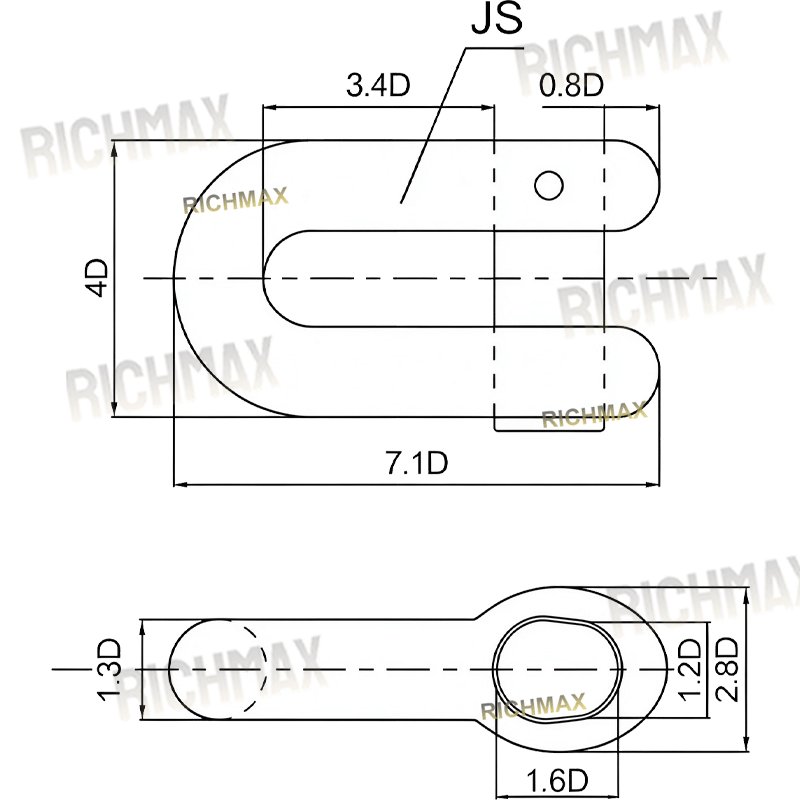
The geometry of the Joining Shackle determines how it fits with the connected anchor chain links.
The main dimensions generally include:
These dimensions should be checked against the product drawing and the actual chain specifications before ordering.
Material
The material used for a Joining Shackle must meet the mechanical requirements specified for its intended application.
As a load-bearing component in a marine chain assembly, the shackle requires suitable strength, toughness and resistance to deformation.
Material selection depends on the product design, manufacturing process, chain grade and applicable technical requirements.
Steel Material
Steel is commonly used for manufacturing marine Joining Shackles.
The selected steel grade should provide the required mechanical properties for the intended chain connection.
Material verification may include:
| Chemical composition | Tensile strength | Yield strength |
| Elongation | Impact toughness | Hardness |
The exact steel grade should be confirmed according to the approved drawing, manufacturing standard or purchase specification.
Forging Process
Depending on the approved design, the shackle body may be manufactured through a forging process.
Forging forms the main body under controlled temperature and deformation conditions.
The forging process should be controlled to ensure consistent material quality and the required component geometry.
Particular attention should be given to the body cross-section, curved section and pin connection areas.
Heat Treatment
Heat treatment is used to achieve the specified mechanical properties of the steel component.
Depending on the material grade and manufacturing requirements, the process may include normalizing, quenching and tempering.
Temperature, holding time and cooling conditions should be controlled according to the approved heat treatment procedure.
Mechanical testing should be carried out to verify that the finished material meets the specified requirements.
Surface Treatment
Joining Shackles are used in marine environments where exposure to seawater, moisture and corrosive conditions is common.
Surface protection may include:
Hot-dip galvanizing
Protective painting
Other specified anti-corrosion coatings
The surface treatment should meet the purchase specification.
For galvanized products, attention should be given to the connecting pin, locking components and fitting areas to ensure that the coating does not interfere with assembly.
How To Use?
Joining Shackle is installed as a mechanical connecting component in a marine anchor chain assembly.
It connects compatible chain sections or specified chain components and allows the assembled system to transfer tensile loads.
Connecting Anchor Chain Sections
Joining Shackle can be used to connect two compatible sections of anchor chain.
Before installation, the operator should confirm the chain diameter, link dimensions and shackle specifications.
The connected links must fit correctly within the shackle body without excessive clearance or interference.
Installing the Connecting Pin
After positioning the connecting components, the connecting pin is installed through the designated connection area.
The pin must correspond to the original shackle design and should not be replaced with an unapproved alternative.
Securing the Pin
The locking components should be installed according to the manufacturer's assembly instructions.
Before the chain assembly is put into service, check that:
The connecting pin is correctly positioned.
The locking components are properly secured.
The connected links are correctly seated.
No visible cracks or deformation are present.
The assembled connection has no abnormal interference.
Inspection During Operation
Joining Shackles should be included in the inspection schedule of the complete anchor chain system.
Inspection should focus on the connecting pin, locking components and contact surfaces.
Wear, deformation, corrosion and pin movement should be evaluated according to the applicable inspection criteria.
Application
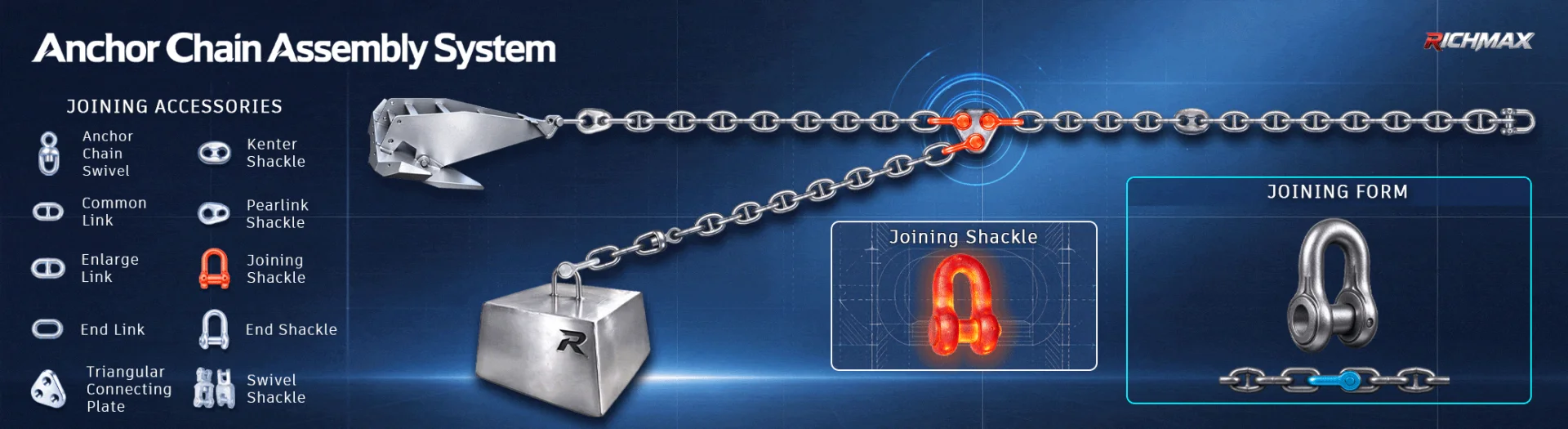
Joining Shackles are used in marine chain assemblies where detachable mechanical connections are required.
Their application depends on the shackle design, connected chain specifications and mechanical requirements of the complete system.
Marine Anchor Chain Systems
Joining Shackles are used in marine anchoring arrangements to connect compatible anchor chain sections or related connecting components.
The shackle dimensions and mechanical properties must correspond to the vessel's specified anchoring system.
Anchor Chain Replacement
During anchor chain replacement or maintenance, Joining Shackles may be used to connect replacement chain sections with existing chain assemblies.
The replacement shackle must match the original connection design, chain diameter and required mechanical properties.
Dimensional compatibility should be verified before installation.
Shipbuilding and Ship Repair
Joining Shackles are used in shipbuilding projects and vessel maintenance work involving anchor chain installation, replacement or repair.
They may be supplied as part of a complete anchor chain assembly or as individual replacement components.
Offshore Mooring Systems
Depending on the product design and approved system specification, Joining Shackles may also be used in offshore chain connection arrangements.
Applications may include offshore platforms and floating offshore units.
For these applications, the shackle grade, mechanical performance and connection configuration must meet the project-specific requirements.
Marine Equipment Supply
Joining Shackles are supplied to marine equipment distributors, ship chandlers and industrial suppliers dealing with anchor chain systems.
For replacement orders, product drawings and dimensional information help ensure compatibility with the existing equipment.
How to Choose the Right Joining Shackle?
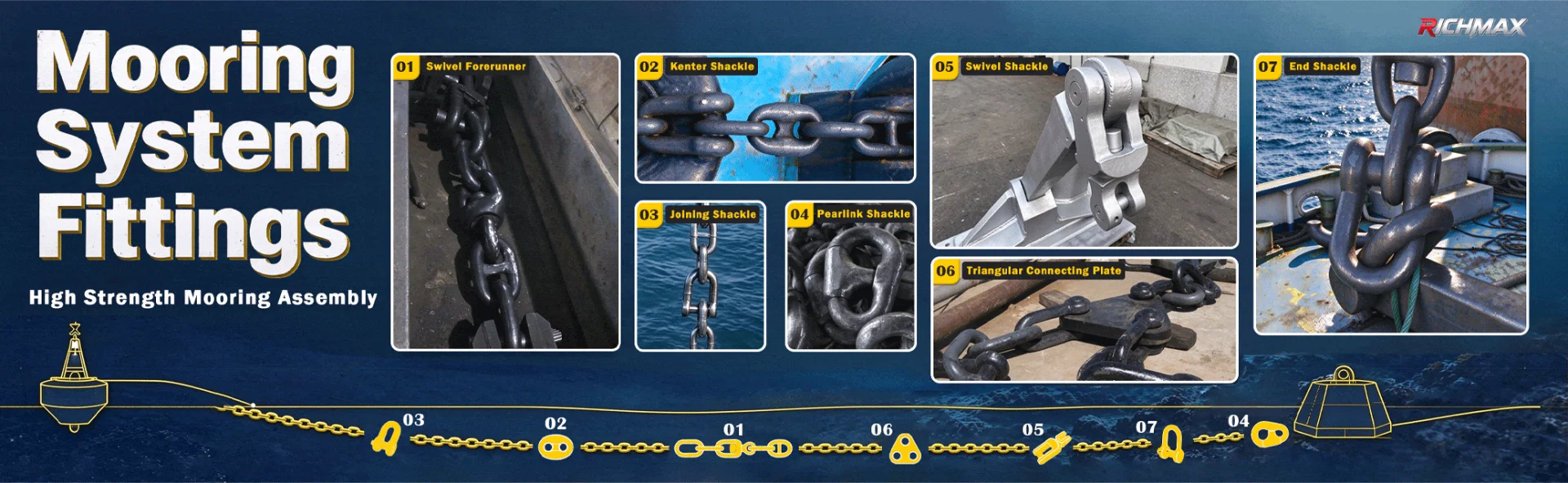
Selecting a Joining Shackle requires more than matching the nominal chain diameter.
The shackle body, connecting pin and locking arrangement must all correspond to the connected chain components and the mechanical requirements of the anchoring system.
Confirm the Product Type
First, confirm that the required product is the same Joining Shackle design shown in the original drawing or product reference.
Different chain connecting components may have similar functions but different body structures and assembly methods.
Do not substitute a Kenter Shackle or another connecting design without checking the connection requirements.
Confirm Chain Diameter and Link Dimensions
The nominal chain diameter is an important reference when selecting a Joining Shackle.
However, the chain link dimensions also affect the fitting relationship.
The buyer should confirm:
Nominal chain diameter
Link inside length
Link inside width
Link outside dimensions
Shackle internal clearance
Connecting pin dimensions
These measurements should be checked against the original chain drawing or actual product dimensions.
Match the Chain Grade
The required Joining Shackle should be suitable for the mechanical requirements of the connected chain.
For marine anchor chains, the chain grade and corresponding mechanical requirements should be identified before ordering.
For example, chain grades such as U2, U3 and other specified grades have different mechanical requirements.
The shackle material and performance should be confirmed against the applicable product specification rather than selected by appearance or size alone.
Check Mechanical Properties
The mechanical properties of the shackle should meet the requirements of the intended application.
Depending on the specification, relevant properties may include:
| Yield strength | Tensile strength | Elongation | Impact toughness |
| Hardness | Proof load | Breaking load |
|
The applicable test requirements and acceptance criteria should be agreed before production.
Confirm Surface Treatment
The required surface protection should be specified according to the operating environment.
Hot-dip galvanizing is commonly specified for marine chain components requiring corrosion protection.
When selecting a galvanized Joining Shackle, check the coating requirements and the dimensional condition of the connecting pin and fitting areas.
Verify Drawing and Connection Compatibility
For replacement orders, the original product drawing is the preferred reference.
If no drawing is available, provide clear measurements of the existing shackle and connected chain links.
The supplier should review the body geometry, internal clearance, pin dimensions and locking arrangement before confirming the order.

How To Choose A Relliable Marine Anchor Chain Supplier?
Supplier Evaluation for Joining Shackle
When purchasing Joining Shackles, buyers should evaluate the supplier's ability to control material quality, manufacturing dimensions, mechanical properties and inspection records.
Material Control
The supplier should identify the steel grade used for manufacturing and provide relevant material documentation.
Material traceability should be maintained from raw material inspection through the manufacturing process.
Depending on the purchase requirements, documentation may include:
Material grade
Heat number
Chemical composition report
Mechanical test report
Material certificate
Manufacturing Process Control
The supplier should have a defined manufacturing process suitable for the specified Joining Shackle design.
The process may include:
Raw material preparation
Forging
Heat treatment
Machining
Surface treatment
Final assembly
Buyers should understand which processes are completed in-house and which are subcontracted.
For subcontracted processes, the supplier should maintain process records and inspection controls.
Dimensional Inspection Capability
The supplier should be able to inspect the critical dimensions of the shackle body and connecting pin.
Particular attention should be given to:
Body profile
Internal bow dimensions
Body cross-section
Pin diameter
Pin length
Assembly clearance
Inspection results should be compared with the approved drawing and specified tolerances.
Mechanical Testing
The supplier should be able to arrange the mechanical tests required by the product specification.
These may include tensile testing, impact testing, hardness testing and proof load testing.
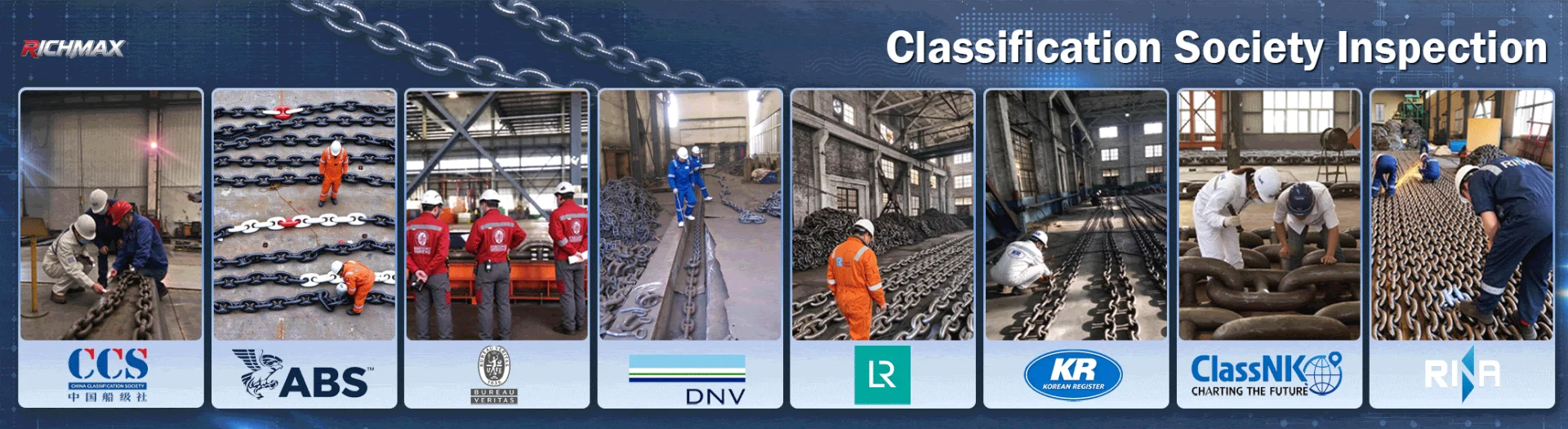
The test scope should be confirmed according to the applicable standard, classification requirements and purchase agreement.
Surface Treatment Control
For galvanized or painted Joining Shackles, the supplier should be able to control the surface treatment process.
The inspection should cover coating appearance, coverage, thickness and the condition of the fitting surfaces.
The coating must not interfere with the intended assembly.
Inspection Records and Documentation
Before placing an order, buyers should clarify the required technical documents.
Depending on the project, these may include:
Product drawing
Material certificate
Heat treatment record
Dimensional inspection report
Mechanical test report
NDT report, where specified
Proof load test report, where specified
Surface treatment record
Final inspection report
Classification certificate, where required
The documentation should correspond to the actual product and agreed inspection scope.
FAQ
1. What is a Joining Shackle?
A Joining Shackle is a mechanical connecting component used to join two chain sections or connect compatible components within a marine chain assembly.
It provides a detachable connection while transferring tensile loads between the connected components.
2. What is the difference between a Joining Shackle and a Kenter Shackle?
Both are used to connect chain components, but their structural designs and connection methods may differ.
A Kenter Shackle generally uses a multi-part connecting arrangement with a central joining structure and locking components.
Joining Shackle is a broader product description and may refer to different connecting designs.
The required type should be identified from the drawing or chain system specification.
3. Where are Joining Shackles used?
Joining Shackles are used in marine anchoring systems, anchor chain assemblies, offshore mooring systems and ship maintenance projects.
Their specific application depends on the design and load requirements of the connected chain components.
4. What materials are used for Joining Shackles?
Joining Shackles are commonly manufactured from forged steel or other specified steel materials.
The exact material grade depends on the required mechanical properties, manufacturing process and applicable technical specification.
5. Are Joining Shackles suitable for offshore mooring systems?
They may be used in offshore mooring systems when their design, material properties and mechanical performance meet the approved project requirements.
The required chain grade, connection configuration and inspection scope must be confirmed before use.
6. How do I select the correct Joining Shackle size?
The selection should consider chain diameter, link dimensions, shackle internal clearance, body dimensions and pin diameter.
The original product drawing or dimensional measurements should be used to verify compatibility.
7. What inspections are required for Joining Shackles?
Typical inspection items include visual inspection, dimensional inspection, material verification and mechanical testing.
Additional NDT or load testing may be required depending on the product specification and classification requirements.
8. Can Joining Shackles be hot-dip galvanized?
Yes. Hot-dip galvanizing can be specified for marine applications requiring corrosion protection.
The coating process should be controlled to avoid affecting pin clearance, assembly dimensions and functional contact surfaces.
9. Do Joining Shackles require a classification certificate?
Not every Joining Shackle requires an individual classification certificate.
The requirement depends on the vessel, project specification, applicable classification rules and purchase agreement.
For classification-controlled applications, the required approval and inspection arrangements should be confirmed before production.

 English
 Español
 Français
 Árabe
 Русский
 Português
 日本語
 한국어
 Dansk
 Nederlands
 Italiano
 Türkçe
 Deutsch
 Prancis
 ไทย
 Tiếng Việt
 हिंदी
 বাংলা
 中文