Structure
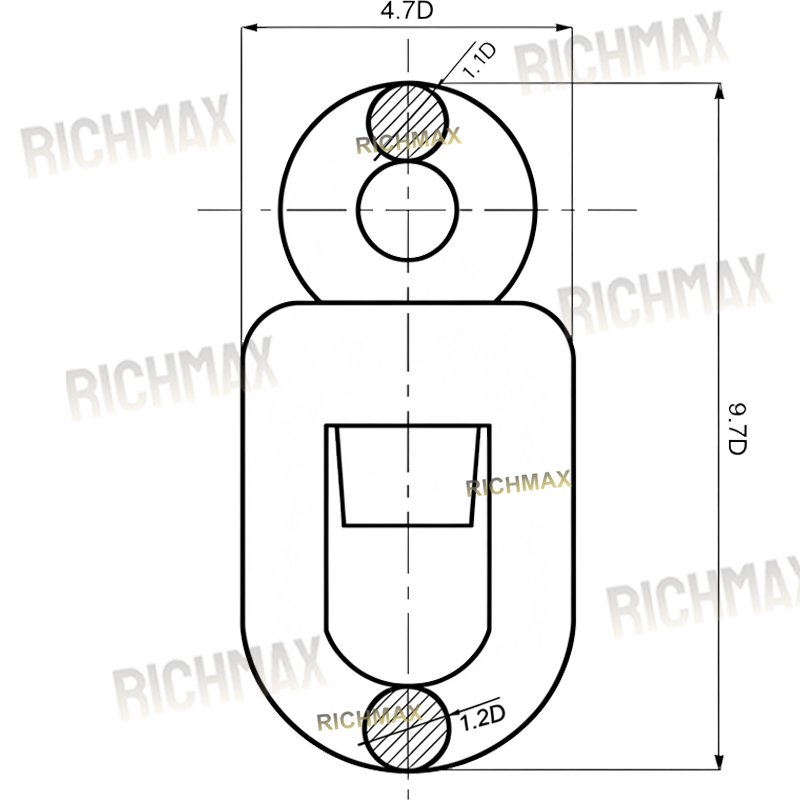
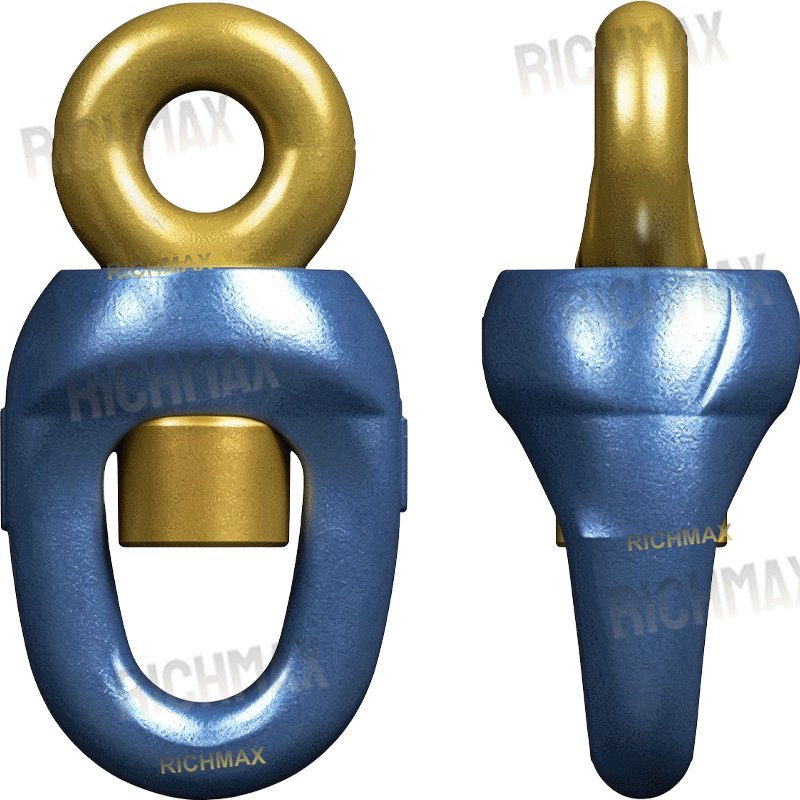
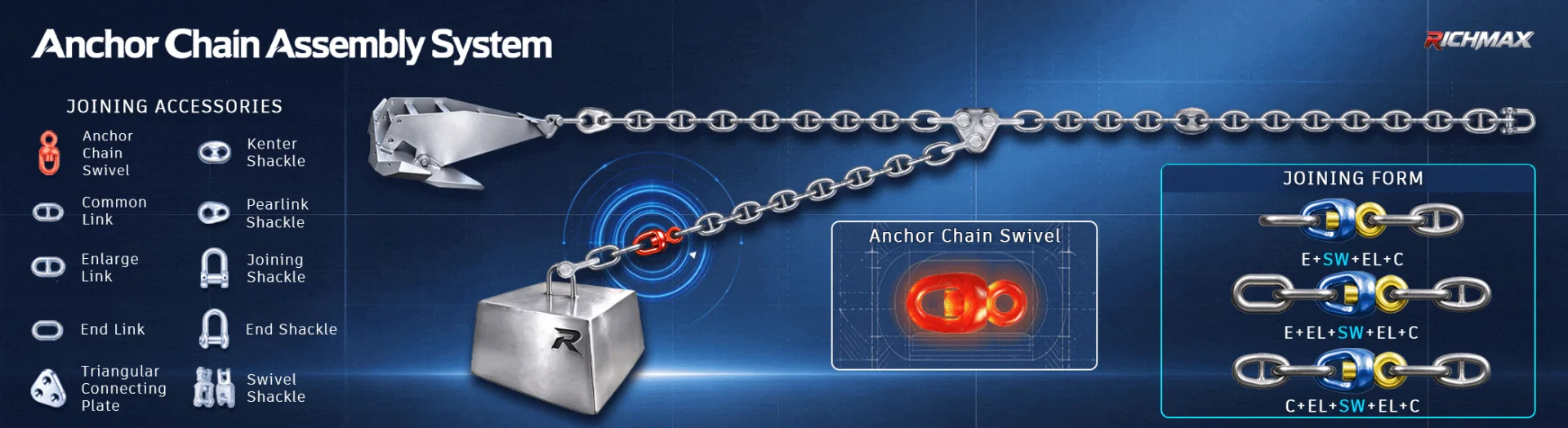
An Anchor Chain Swivel consists of connecting ends, a swivel body and an internal rotating mechanism. Its main function is to connect two components in an anchor chain system while allowing relative rotation between them.
The product configuration may vary depending on the connection type, chain size and design requirements.
Connecting Ends
The connecting ends provide the interface between the swivel and the adjacent chain links, shackles or other connecting fittings.
Common configurations include:
Eye & Eye Swivel: Both ends are designed with closed eyes for connection to compatible chain components or shackles.
Eye & Jaw Swivel: One end has a closed eye, while the other uses a jaw connection with a removable pin.
Jaw & Jaw Swivel: Both ends use jaw connections for applications requiring pin-connected interfaces.
The connection dimensions must match the adjoining components. Particular attention should be paid to eye diameter, jaw opening, pin diameter and available clearance.
Swivel Body
The swivel body houses the rotating connection between the two ends.
It must maintain sufficient structural integrity while allowing the designed rotational movement. The body dimensions, bearing arrangement and connection geometry are determined by the product design and specified working loads.
Rotating Mechanism
The internal rotating mechanism allows one connecting end to rotate relative to the other.
Depending on the design, this mechanism may use a pin, spindle, bearing surfaces or other mechanical arrangements.
The rotating parts must maintain proper alignment and sufficient clearance. Excessive clearance may affect the connection, while insufficient clearance may restrict rotation.
Connection with Anchor Chain
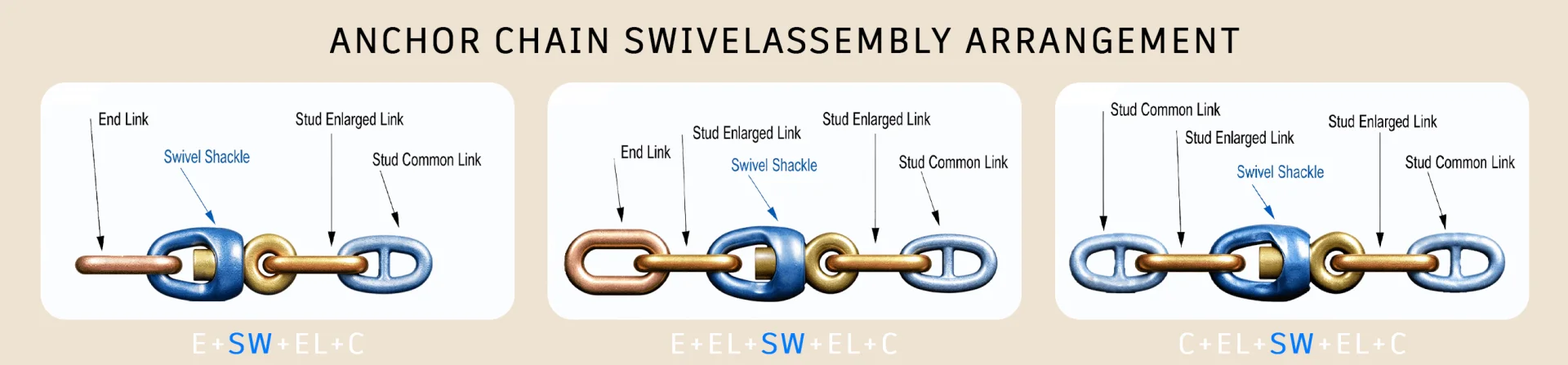
An Anchor Chain Swivel is normally installed between compatible chain components or between the anchor chain and another specified connecting fitting.
The connection arrangement depends on the vessel's approved anchoring system.
The swivel must not interfere with the chain links, joining shackles, chain stopper or windlass operation.
Material
The material selection of an Anchor Chain Swivel depends on its design, required mechanical properties, manufacturing process and operating environment.
For marine applications, the material must provide adequate strength, toughness and resistance to the service conditions specified for the anchoring system.
Forged Steel
Forged steel may be used for swivel components requiring high mechanical strength and structural integrity.
The forging process forms the component under controlled temperature and pressure conditions. Material properties depend on the selected steel grade, forging ratio, heat treatment and subsequent manufacturing processes.
Forged construction is commonly considered for load-bearing swivel components where the design and purchasing specification require it.
Cast Steel
Cast steel may be used for swivel bodies and other components designed for casting production.
The casting grade and process must be selected according to the required mechanical properties and applicable manufacturing specifications.
Foundry process control, heat treatment and inspection are important factors in determining the quality of cast components.
Material Requirements
Material selection should be based on the approved drawing, applicable standard and purchase specification.
The following information should be confirmed before production:
Material grade and chemical composition
Required tensile strength and yield strength
Elongation and impact properties, where specified
Heat treatment requirements
Material traceability and heat number
Classification society or project approval requirements
Material grades should not be determined solely by the product name or nominal chain diameter.
Surface Protection
Marine Anchor Chain Swivels may be supplied with different surface finishes according to the application.
Common options include:
Black finish
Shot-blasted surface
Protective coating
Other specified anti-corrosion treatments
The coating system should be compatible with the service environment and should not interfere with the rotating mechanism, pin fit or connecting dimensions.
How To Use?
How to Install and Use an Anchor Chain Swivel
An Anchor Chain Swivel is installed as part of a vessel's anchoring system to provide a rotating connection between adjacent components.
Its installation position must follow the approved anchoring arrangement and the manufacturer's installation instructions.
Confirm the Installation Position
Before installation, identify the specified position of the swivel in the anchor chain assembly.
Depending on the system design, the swivel may be installed between the anchor and the anchor chain or at another designated connection point.
The installation arrangement should be checked against the vessel's approved anchoring drawing.
Check Connection Compatibility
Before connecting the swivel, verify that its connecting ends are compatible with the adjoining chain links, shackles or other fittings.
The following dimensions should be checked:
Chain nominal diameter
Connecting eye dimensions
Jaw opening and pin diameter, where applicable
Overall length of the swivel
Clearance between adjacent components
A swivel should not be forced into a connection that does not match its specified dimensions.
Install the Connecting Components
For a pin-connected configuration, the connecting pin and its locking arrangement should be installed according to the manufacturer's instructions.
For closed-eye configurations, the appropriate joining shackle or connecting component should be used.
All connecting components must be suitable for the specified load and compatible with the anchoring system.
Check Rotational Movement
After installation, check whether the swivel can rotate as intended by its design.
The rotating mechanism should move without abnormal binding or interference.
Inspect the surrounding chain links and fittings to ensure that the swivel does not restrict the movement or handling of the chain.
Inspection During Service
During scheduled maintenance, inspect the swivel for:
Visible deformation
Cracks or surface damage
Excessive wear
Abnormal clearance
Corrosion affecting the component
Damage or loosening of connecting pins
Restricted rotational movement
If abnormal wear, damage or deformation is found, the component should be assessed according to the applicable inspection and maintenance procedure before further use.
Application
Anchor Chain Swivels are used in marine anchoring arrangements where relative rotation between connected components is required.
Their selection and installation depend on the vessel type, chain arrangement and applicable technical requirements.
Commercial Vessels
Used in anchoring systems of cargo ships, bulk carriers, container vessels and general cargo ships.
The swivel connects specified components within the anchor chain assembly and allows relative rotation during anchoring operations.
Tankers
Used in the anchoring systems of oil tankers, chemical tankers and other tanker vessels.
The required swivel size, material and mechanical properties should correspond to the vessel's anchoring system specification.
Offshore and Marine Engineering
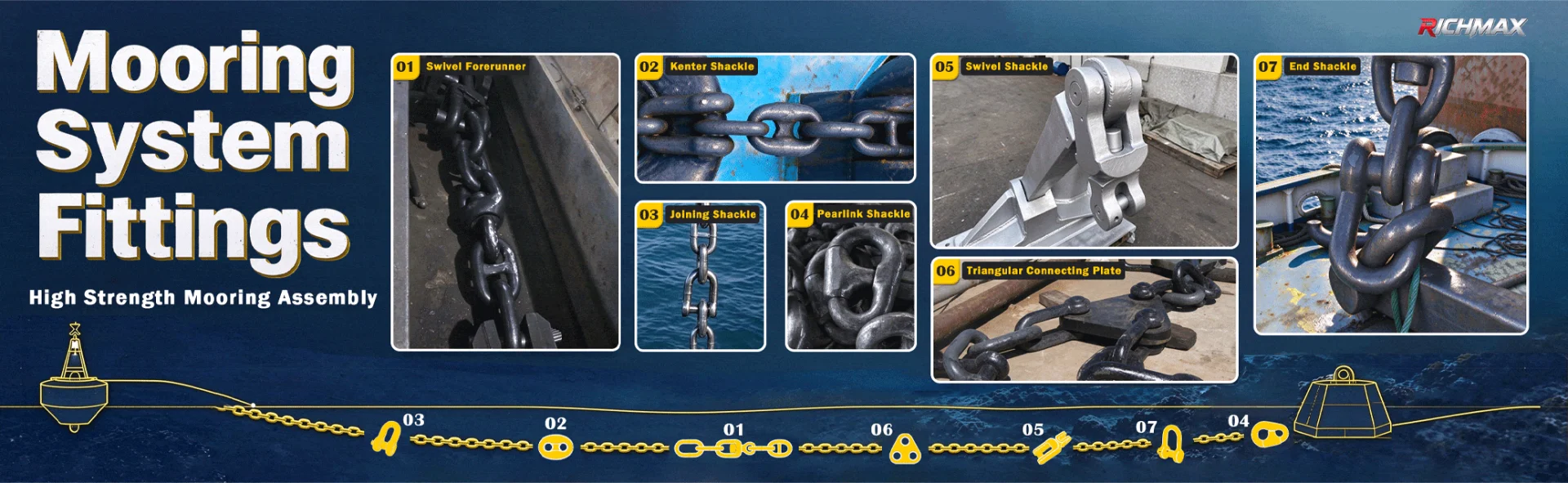
Anchor Chain Swivels may be used in specified offshore and marine engineering connection arrangements where a rotating connection is required.
For permanent mooring systems, the swivel must be specifically designed and approved for the applicable mooring loads and service conditions. A conventional vessel anchor chain swivel should not automatically be treated as suitable for offshore permanent mooring.
Shipbuilding and Ship Repair
Used by shipyards, ship repair companies and marine equipment suppliers for:
New vessel anchoring system installation
Replacement of existing swivel components
Anchor chain assembly maintenance
Marine spare parts procurement
The replacement component should match the original equipment specification or the approved replacement drawing.
How to Choose the Right Anchor Chain Swivel?
Selecting an Anchor Chain Swivel requires more than matching the nominal chain diameter. Buyers should confirm the connection configuration, dimensions, mechanical requirements and compatibility with the existing anchoring system.
Confirm Chain Diameter and Connection Dimensions
The nominal chain diameter is an important reference for swivel selection, but it does not define all connecting dimensions.
The buyer should provide or confirm:
Anchor chain diameter
Chain grade
Connecting eye dimensions
Jaw opening, if applicable
Pin diameter
Overall swivel length
Required connection clearance
These dimensions should be checked against the adjoining chain links and connecting shackles.
Confirm the Required Working Load
The swivel must have an appropriate load capacity for its intended position in the anchoring system.
The buyer should confirm the specified working load, proof load and breaking load requirements, where applicable.
The mechanical requirements should be based on the approved design, applicable standard and classification requirements.
A swivel should not be selected simply because its nominal size is similar to another component.
Confirm Material and Manufacturing Requirements
Material selection should correspond to the required mechanical properties and manufacturing specification.
For procurement, confirm:
Material grade
Forged or cast construction
Heat treatment requirements
Mechanical test requirements
Applicable manufacturing standard
Classification or project inspection requirements
The supplier should identify the actual material and manufacturing basis rather than providing only a general description.
Check Compatibility with Adjacent Equipment
The swivel should be compatible with the chain, joining shackles and other connecting fittings in the anchoring assembly.
For replacement orders, it is useful to provide photographs, original equipment drawings or an existing component sample.
This helps reduce dimensional mismatch and installation problems.
Confirm Surface Treatment and Documentation
The required coating or surface finish should be specified according to the vessel's service environment.
The purchase order should also identify the required inspection documents, material certificates and classification documentation, if applicable.

How To Choose A Reliable Marine Anchor Chain Swivel Supplier?
Supplier Evaluation for Anchor Chain Swivel
When purchasing Anchor Chain Swivels, buyers should evaluate the supplier's ability to control material quality, manufacturing processes, dimensional accuracy and product inspection.
Product Design and Technical Understanding
The supplier should understand the differences between Eye & Eye, Eye & Jaw and Jaw & Jaw configurations.
It should be able to review the buyer's drawing and confirm the relevant dimensions, connection arrangement and technical requirements before production.
For replacement orders, the supplier should also be able to check the compatibility of the swivel with the existing chain and connecting fittings.
Material Control
Material traceability is important for load-bearing marine components.
The supplier should be able to provide relevant material information, including grade, heat number and material inspection records according to the purchase specification.
Where required, material certificates should be available for verification.
Manufacturing Process Control
The supplier should have clear control procedures for the applicable forging or casting process, machining, heat treatment and surface treatment.
If some processes are subcontracted, the supplier should be able to identify the responsible manufacturing facility and explain how process quality is controlled.
Inspection Capability
The supplier should have the ability to carry out the required dimensional, visual and mechanical inspections.
Depending on the product specification, inspection may also include non-destructive testing and load testing.
The inspection scope should be agreed before production rather than assumed to be identical for every order.
Documentation and Delivery
Before placing an order, confirm which documents will be supplied.
These may include:
Product drawings
Material certificates
Dimensional inspection reports
Mechanical test reports
Non-destructive testing reports, where required
Load test reports, where specified
Classification certificates, where applicable
The supplier should also confirm production lead time, inspection arrangements, packing requirements and delivery responsibilities.
FAQ
1. What is an Anchor Chain Swivel?
An Anchor Chain Swivel is a connecting fitting installed in a marine anchoring system. It allows relative rotation between connected components to help reduce the accumulation of twisting in the anchor chain assembly.
2. What is the main function of an Anchor Chain Swivel?
Its main function is to provide a rotating connection between adjacent components. It helps accommodate relative rotation and reduce torsional accumulation during anchoring operations.
3. What are the common types of Anchor Chain Swivels?
Common configurations include Eye & Eye, Eye & Jaw and Jaw & Jaw. The correct type depends on the connection arrangement and the dimensions of the adjoining components.
4. Where is an Anchor Chain Swivel installed?
It is installed at a designated connection point in the vessel's anchoring system. The exact position depends on the approved anchoring arrangement and the equipment manufacturer's instructions.
5. How do I select an Anchor Chain Swivel for my anchor chain?
Confirm the chain diameter, chain grade, swivel type, connecting dimensions, required mechanical properties and applicable standards. For replacement orders, the original drawing or component dimensions should also be provided.
6. What materials are used for Anchor Chain Swivels?
Depending on the design, Anchor Chain Swivels may be manufactured from forged steel or cast steel. The actual material grade should be determined by the product specification and required mechanical properties.
7. Is an Anchor Chain Swivel suitable for offshore mooring systems?
Not every conventional anchor chain swivel is suitable for permanent offshore mooring. Offshore applications require confirmation of the design load, fatigue requirements, environmental conditions and applicable project approval.
8. Does an Anchor Chain Swivel prevent all chain twisting?
No. A swivel allows relative rotation between connected components and helps reduce torsional accumulation. It does not guarantee that all chain twisting will be eliminated under every operating condition.
9. What is the difference between an Anchor Chain Swivel and a Joining Shackle?
A Joining Shackle is primarily used to connect two chain sections or connecting components. An Anchor Chain Swivel provides a rotating connection that allows relative movement between the connected ends. Their functions are different, and they should not be treated as interchangeable.

 English
 Español
 Français
 Árabe
 Русский
 Português
 日本語
 한국어
 Dansk
 Nederlands
 Italiano
 Türkçe
 Deutsch
 Prancis
 ไทย
 Tiếng Việt
 हिंदी
 বাংলা
 中文