Structure
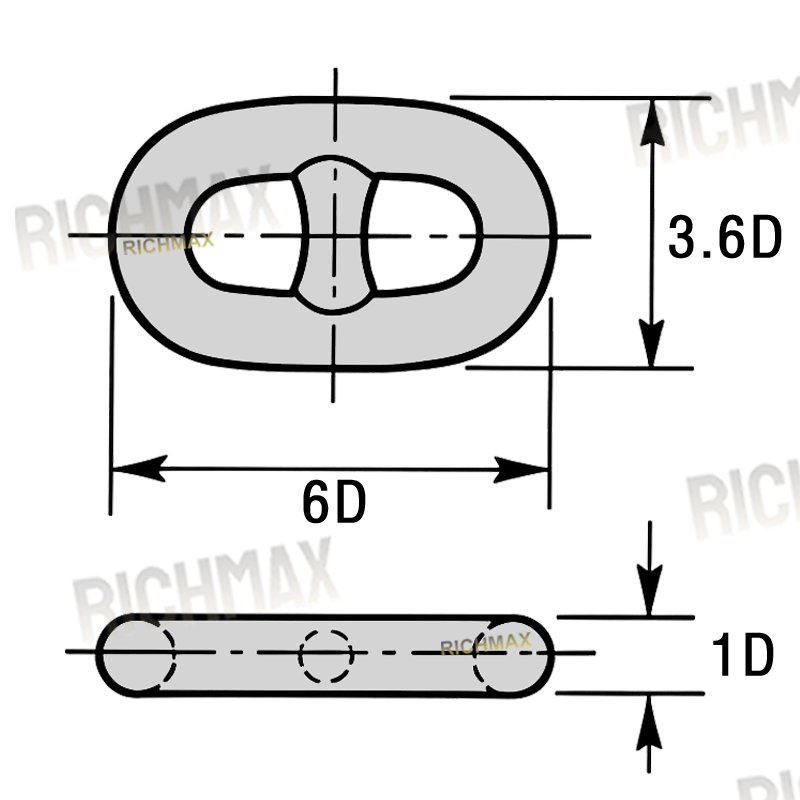
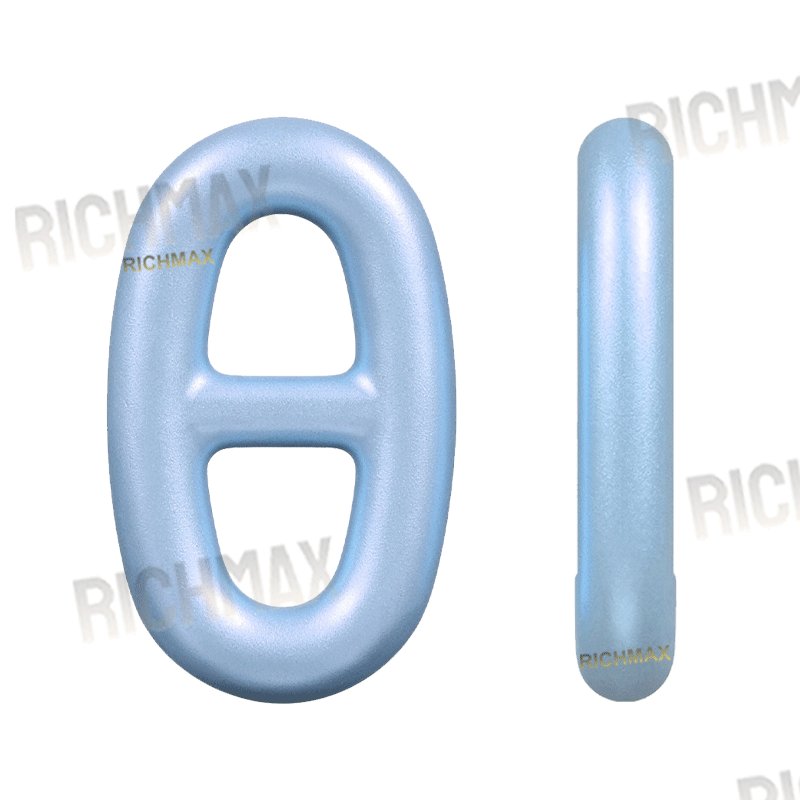
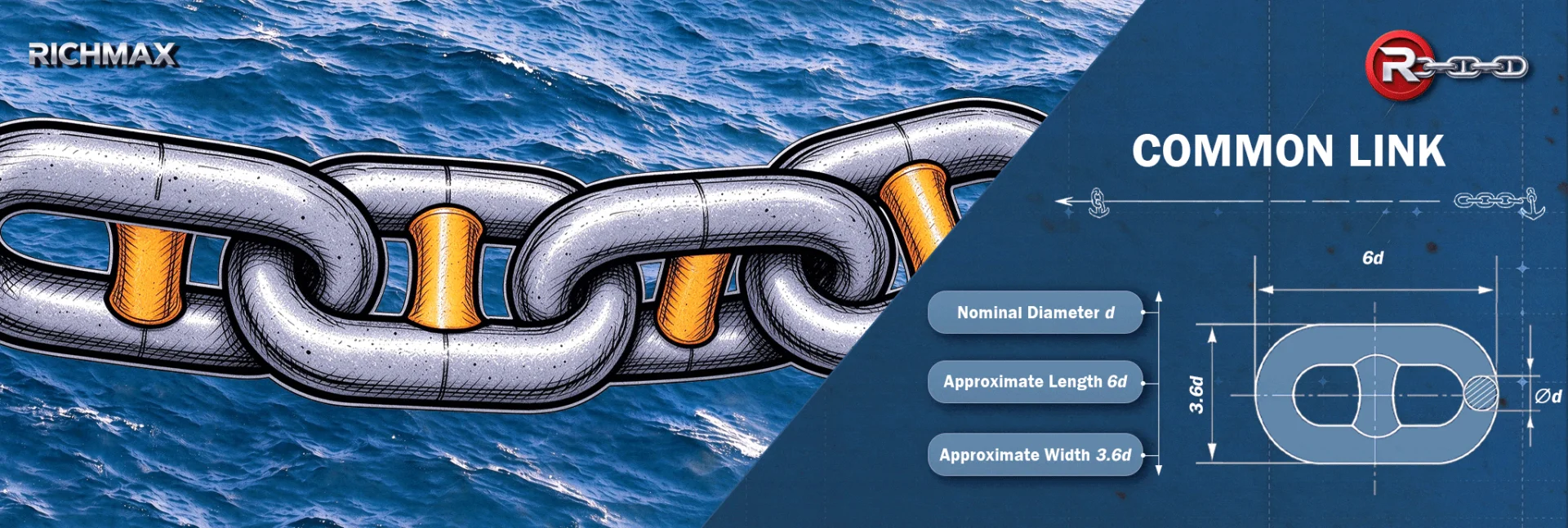
A Common Link consists of a closed steel link with a curved crown at each end, two parallel side sections and a transverse stud fitted across the central opening. The stud link configuration is designed for use in continuous marine chain assemblies.
The main structural parts include:
Crown
The curved sections at both ends of the link form the crowns. They provide the transition between the straight side sections and determine the internal shape of the link. The crown dimensions and cross-sectional area are important to the link's load-bearing capacity.
Side Sections
The two longitudinal sections connect the crowns and form the main load-bearing body of the link. Their diameter, cross-sectional uniformity and surface condition are important manufacturing considerations.
Stud
The transverse stud is positioned across the middle of the link. It supports the internal configuration of the link and helps prevent excessive deformation of the link under working conditions. Its fit and retention are important because a loose or displaced stud can affect the service condition of the chain.
Welded Joint
For flash-butt-welded chain links, the weld joint is a critical manufacturing area. Welding quality, joint alignment and subsequent heat treatment influence the mechanical properties and integrity of the finished link.
Material
Material Selection for Common Link
The material used for a Common Link must meet the mechanical requirements of the complete chain system. Tensile strength, yield strength, elongation, impact properties and heat-treatment condition are relevant considerations when selecting the steel.
Material selection depends on the intended application, chain grade, manufacturing process and applicable classification or project requirements.
Steel for Anchor Chain Links
For marine stud-link anchor chains, steel grades are normally selected according to the applicable anchor chain standard and classification requirements.
Depending on the chain specification, different grades are used to meet the required proof load, breaking load and mechanical properties.
The grade of a Common Link should correspond to the chain grade for which it is manufactured or approved. A link of a different grade should not be substituted solely because its nominal diameter is the same.
Steel for Offshore Mooring Chains
Offshore mooring chains may use different material grading systems from conventional ship anchor chains.
Grades such as R3, R3S, R4, R4S and R5 are encountered in offshore mooring chain specifications. These grades are associated with particular mechanical and testing requirements.
The applicable grade should be confirmed against the offshore project specification and relevant classification requirements rather than treated as interchangeable with conventional anchor chain grades.
Material Traceability
For projects requiring material traceability, the supplier should maintain records connecting the steel heat number with the manufacturing and inspection records.
Relevant documentation may include:
Steel material certificate and chemical composition.
Mechanical test results.
Heat treatment records.
Manufacturing batch identification.
Applicable classification or inspection records.
Heat Treatment
Heat treatment is an important part of chain link manufacturing. Depending on the material grade and manufacturing route, normalizing, quenching and tempering, or other specified heat-treatment processes may be required.
The purpose is to achieve the mechanical properties specified for the chain grade while maintaining consistent properties throughout the link.
The heat-treatment procedure should be controlled and documented according to the approved manufacturing specification.
How to Use?
Common Links are assembled consecutively to form the main length of a stud-link anchor chain. Each link connects with the adjacent links through its internal opening, creating a continuous chain structure.
In a conventional ship anchor chain arrangement, Common Links form the main body of each chain shot. Joining Shackles, End Links, Enlarged Links and other designated fittings are incorporated where required by the chain configuration.
Forming the Main Chain Length
Multiple Common Links are assembled in sequence to achieve the required chain length. The nominal diameter and dimensional proportions must remain consistent throughout the chain section to ensure proper articulation between adjacent links.
Connecting Chain Sections
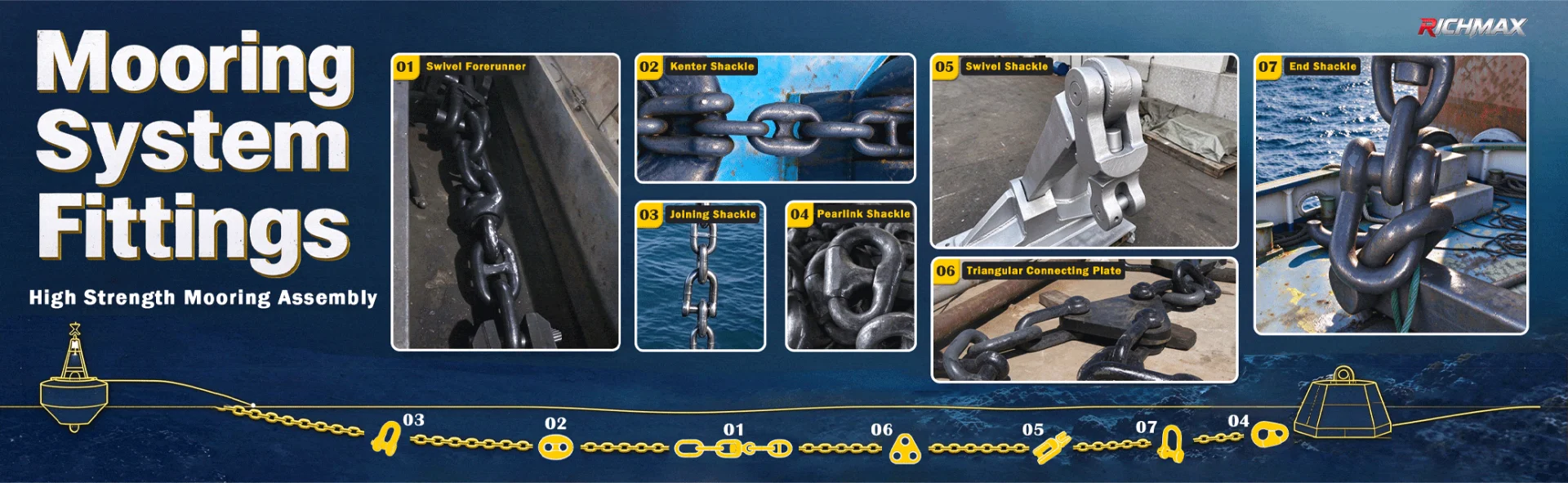
When two chain shots need to be connected, a compatible Joining Shackle, such as a Kenter Shackle, may be used according to the specified chain arrangement.
Common Links form part of the chain sections on either side of the connecting fitting. The connection must match the chain diameter, grade and dimensional requirements.
Connecting to Other Chain Components
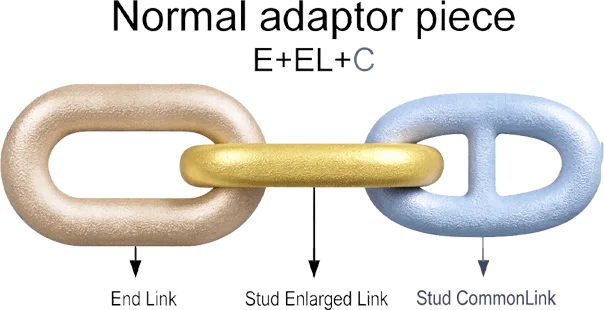
Common Links may be used alongside Enlarged Links, End Links, End Shackles and Swivels in an assembled anchor chain system.
These components have different structural functions and should be positioned according to the approved chain arrangement rather than substituted for one another.
Replacement and Maintenance
When a Common Link is used as a replacement component, the replacement must match the original chain specification.
Nominal diameter alone is not sufficient. Chain grade, dimensions, material properties, manufacturing method and applicable inspection requirements should also be considered.
A replacement link should not be installed into a certified chain assembly without confirming its compatibility and acceptance under the relevant inspection requirements.
Application
Common Link Applications in Marine and Mooring Systems
Ship Anchor Chains
Common Links form the main length of stud-link anchor chains used on commercial vessels, including bulk carriers, container ships, tankers and general cargo vessels.
They connect consecutively to provide the required chain length between the vessel's windlass and anchor.
Marine Mooring Systems
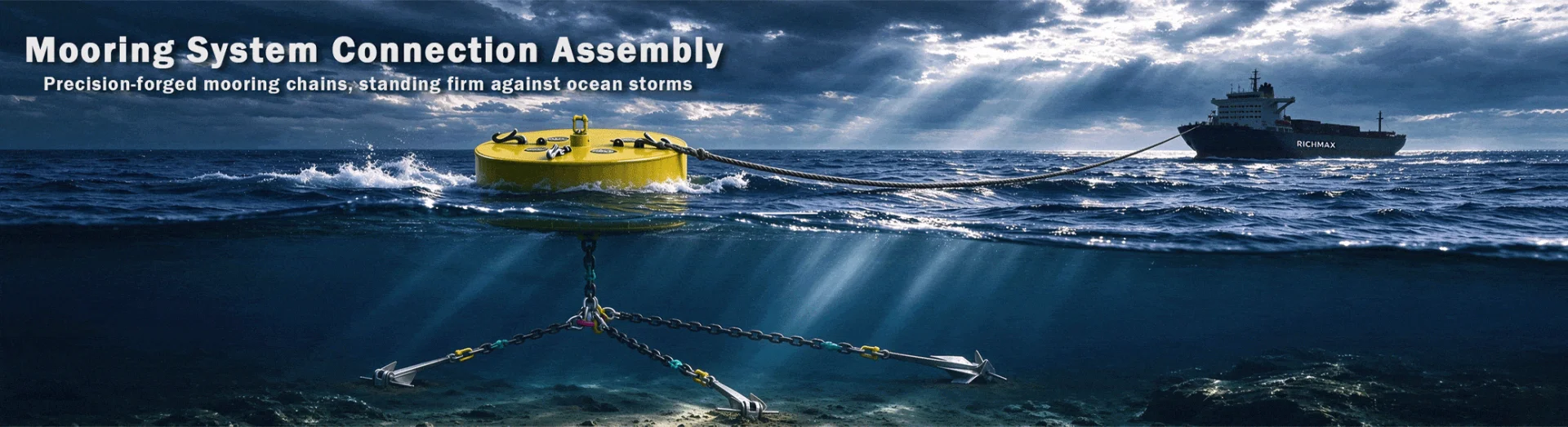
Common Links may also form part of specified marine mooring chain assemblies. Their dimensions, steel grade and mechanical properties must correspond to the requirements of the mooring system.
Offshore Mooring Projects
For offshore applications, chain links are selected according to the project design, chain grade, environmental loads and applicable offshore mooring specifications.
The requirements for offshore mooring chain should be evaluated separately from conventional ship anchor chain requirements.
Anchor Chain Repair and Replacement
Common Links may be required for chain maintenance, replacement and assembly work where the original chain configuration permits their use.
The replacement component must be verified against the original chain dimensions, grade and technical documentation before installation.
How to Choose Common Link?
Factors to Consider When Selecting a Common Link
Selecting a Common Link requires more than matching its nominal diameter. It must be compatible with the existing chain assembly in terms of dimensions, grade, mechanical properties and manufacturing requirements.
Confirm the Nominal Chain Diameter
The nominal diameter is the starting point for product selection. It determines the basic size of the Common Link and provides the reference for its other dimensions.
Buyers should confirm the nominal diameter from the original chain specification, drawing or equipment documentation.
Check the Chain Grade
Chain grade determines the required mechanical properties and testing criteria.
For example, conventional ship anchor chains and offshore mooring chains may follow different grading systems.
The Common Link must be manufactured to the grade specified for the complete chain assembly. A higher nominal strength claim does not automatically establish compatibility with another chain grade.
Verify the Main Dimensions
The following dimensions should be checked against the applicable standard or approved drawing:
Nominal material diameter.
Outside length.
Outside width.
Inside length.
Inside width.
Pitch.
Stud dimensions and fit.
Dimensional compatibility is important because Common Links must articulate freely with adjacent links without abnormal interference.
Confirm the Manufacturing Method
Common Links may be manufactured using approved chain-link forming and welding processes.
The manufacturing route should meet the requirements of the specified chain grade. Buyers should confirm the process, weld quality control and heat-treatment procedure when reviewing supplier documentation.
Consider Classification Requirements
For classification-controlled anchor chain or offshore mooring projects, the applicable classification society and inspection requirements should be confirmed before ordering.
The requirements may include approved manufacturing facilities, material traceability, mechanical testing, proof load testing and breaking load testing.
Confirm Whether It Is for a New Chain or Replacement
For new chain production, the Common Link should follow the complete chain design and manufacturing specification.
For replacement orders, buyers should provide the original chain grade, nominal diameter, drawings, existing link dimensions and available certificate information. This helps prevent dimensional or mechanical incompatibility.
How to Choose a Reliable Marine Anchor Chain Supplier?
When purchasing Common Links for marine anchor chains or mooring chain assemblies, buyers should evaluate the supplier's manufacturing capability, dimensional control, material traceability and inspection arrangements.
Understanding of Chain Standards
The supplier should understand the dimensional requirements of stud-link anchor chains and the differences between conventional anchor chain and offshore mooring chain specifications.
For standard stud-link anchor chains, ISO 1704:2022 provides requirements for component shapes, proportions, dimensions and tolerances.
For classification-controlled projects, the applicable classification society rules and approved technical specifications should also be considered.
Material Sourcing and Traceability
A reliable supplier should be able to identify the material grade and provide relevant material documentation when required.
For traceability-controlled orders, buyers should be able to verify the relationship between material heat numbers, production batches and inspection records.
Manufacturing Process Control
The supplier should have defined procedures for link forming, welding, stud fitting and heat treatment, where applicable.
Particular attention should be paid to the consistency of the welded joint, link geometry and heat-treatment records.
Dimensional Inspection Capability
Common Links must maintain dimensional compatibility with the adjoining chain links.
The supplier should have suitable measuring equipment and inspection procedures for checking material diameter, outside dimensions, inside dimensions, pitch and stud positioning.
Testing and Quality Documentation
Depending on the order requirements, relevant documentation may include:
Material certificates.
Chemical composition and mechanical test reports.
Heat treatment records.
Dimensional inspection reports.
Non-destructive testing reports, where specified.
Proof load and breaking load test records for the applicable chain or product.
Classification certificates or inspection documents, where required.
Export and Order Handling
For international procurement, buyers should also confirm the supplier's ability to handle technical drawings, product identification, inspection arrangements, packing requirements and shipping documentation.
For replacement orders, clear communication about the original chain specification is particularly important.
FAQ
1. What is a Common Link in a marine anchor chain?
A Common Link is the basic stud-link component used to form the main length of a marine anchor chain. Multiple Common Links are assembled consecutively to create a continuous chain structure. It is also used in specified mooring chain configurations.
2. What is the difference between a Common Link and an Enlarged Link?
A Common Link is the standard link used throughout the main chain length. An Enlarged Link has modified dimensions and a larger opening to accommodate specific connections between different chain components, such as a Common Link and an End Link in certain chain arrangements.
They have different structural dimensions and should not be used interchangeably.
3. What is the difference between a Common Link and an End Link?
A Common Link forms the regular chain length, while an End Link is a specially dimensioned component used at designated chain-section ends or connection positions. The End Link is designed to work with specified connecting fittings, such as a Joining Shackle.
4. Does a Common Link have a stud?
Yes. A conventional Common Link for a stud-link anchor chain has a transverse steel stud fitted across the middle of the link. This distinguishes it from a studless chain link.
5. What is the function of the stud in a Common Link?
The stud supports the link's internal configuration and helps prevent excessive deformation of the link. Its correct fit and retention are important to maintaining the intended chain geometry.
6. What materials are used for Common Links?
Common Links are manufactured from steel selected according to the required chain grade and technical specification. Material properties, chemical composition and heat-treatment condition must satisfy the applicable manufacturing and classification requirements.
7. What chain grades are available for Common Links?
The available grades depend on the intended chain system. Conventional marine anchor chains commonly use U1, U2 and U3 grading systems, while offshore mooring chains may use R3, R3S, R4, R4S and R5 grades.
The two grading systems should be evaluated under their respective standards and project specifications.
8. Can Common Links be used in offshore mooring systems?
Yes, where the Common Link is designed and manufactured for the specified offshore mooring chain system. The required grade, dimensions, mechanical properties and inspection criteria must follow the project specification.

 English
 Español
 Français
 Árabe
 Русский
 Português
 日本語
 한국어
 Dansk
 Nederlands
 Italiano
 Türkçe
 Deutsch
 Prancis
 ไทย
 Tiếng Việt
 हिंदी
 বাংলা
 中文